
Content Writer & SEO Specialist
Content Writer & SEO Specialist
Aditya Sharma is a content writer at OptM Solutions specializing in automotive electronics, embedded systems, telematics, electric vehicle technologies, connected mobility, and autonomous driving technologies.
LinkedIn ProfileDeploying a reliable telematics control unit has evolved from an optional fleet tracking add-on into a critical regulatory and operational necessity for modern commercial and passenger vehicles. In the era of software-defined vehicles (SDVs), automotive OEMs, Tier 1 suppliers, and fleet operators require robust edge-to-cloud connectivity architectures to handle massive telemetry payloads. Modern connected cars generate upwards of 1 to 2 terabytes of raw data per day, demanding hardware that can process data efficiently before uploading it over cellular networks.
What is a Telematics Control Unit (TCU)?
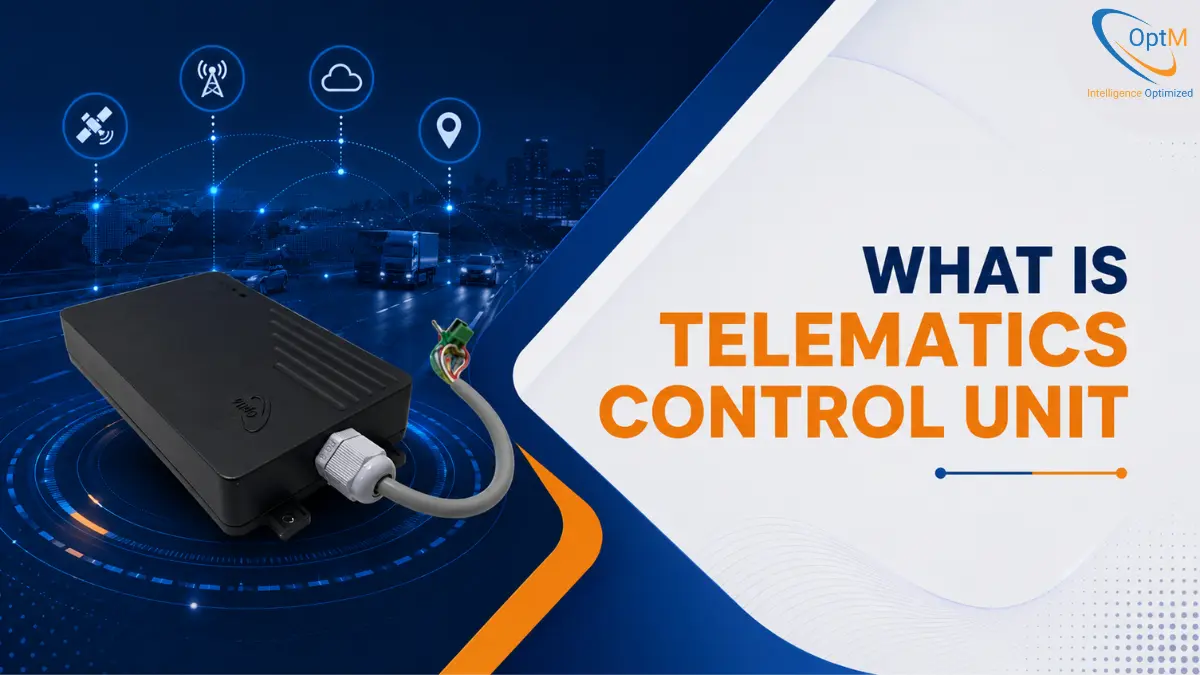
A Telematics Control Unit (TCU) is an advanced automotive embedded system that serves as the primary communication gateway between a vehicle and external cloud networks. By integrating cellular modems, GNSS receivers, and vehicle bus transceivers, a TCU processes real-time diagnostics, manages over-the-air (OTA) updates, and enables intelligent remote monitoring.
According to comprehensive vehicle connectivity data published by McKinsey & Company, capturing the full life-cycle value of connected-car data requires seamless transmission frameworks capable of converting raw telemetry into actionable operational insights. Without an automotive-grade TCU acting as the central nexus, vehicle ecosystems remain isolated silos unable to participate in predictive analytics or smart city ecosystems.
Telematics Control Unit Architecture
In production-grade automotive environments, the interior layout of an embedded computing platform determines its long-term reliability and throughput. The architecture of a modern telematics platform requires strict isolation between safety-critical operations and non-safety connectivity tasks to maintain system integrity.
What is Telematics Control Unit Architecture?
Telematics Control Unit Architecture refers to the combined structural design of hardware components and software stacks within a vehicle connectivity module. It establishes how the central processor interfaces with cellular transceivers, power management integrated circuits (PMICs), and secure software kernels to manage remote data securely.
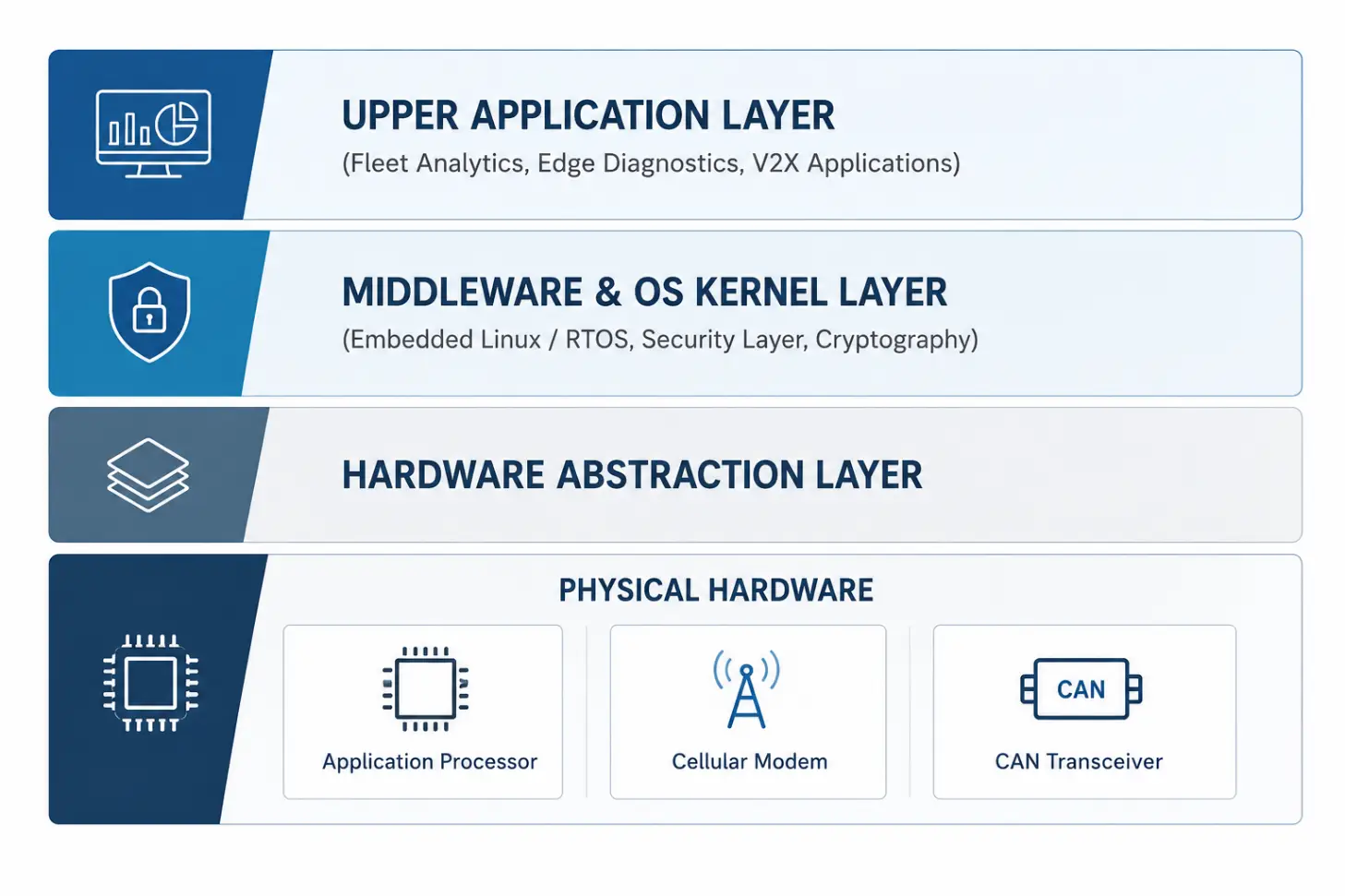
To deliver reliable operations, engineers segment the Telematics Control Unit Architecture into distinct, decoupled tiers:
-
The Hardware Layer: Built around multi-core microprocessors (MPUs) or high-performance microcontrollers (MCUs) running dedicated automotive processing chipsets. These units feature strict thermal dissipation boundaries to operate between -40°C and +85°C.
-
The Software Stack Layer: Utilizing a specialized Real-Time Operating System (RTOS) or customized Embedded Linux distributions. The software stack ensures that high-priority interrupts—such as crash notifications—override standard vehicle state telemetry uploads.
-
The Hardware Abstraction Layer (HAL): Decouples physical peripheral drivers from upper-level application software, allowing developers to upgrade cellular or GPS hardware modules without rewriting the entire core software framework.
Components of Telematics Control Unit
An executive evaluation of a modern vehicle gateway highlights that a TCU is not a single monolithic component, but rather an assembly of highly specialized sub-systems working in parallel. Each sub-system must meet automotive-grade reliability indices to withstand continuous vibration and electrical transients.
What are the Components of a Telematics Control Unit?
The components of a Telematics Control Unit include the central application processor, cellular communication modems, GNSS positioning chips, vehicle network interfaces, and dedicated power management modules. Together, these micro-components process and route high-frequency diagnostics from the internal vehicle bus to cloud endpoints.
| Component Type | Primary Technical Function | Impact on Vehicle Performance |
|---|---|---|
| Application Processor | Executes edge algorithms, packages telemetry, and handles cryptography. | Determines data throughput and edge computing performance. |
| Cellular Modem | Establishes multi-band LTE and 5G connections for uplink/downlink communication. | Governs data transmission latencies and cloud connection stability. |
| GNSS / GPS Module | Tracks precise spatial positioning, heading coordinates, and timing signals. | Essential for navigation, geofencing, and accurate crash site mapping. |
| Vehicle Interface (CAN/J1939) | Bridges physical copper bus lines with the internal digital processor. | Collects real-time engine, battery, and safety sensor states. |
| Power Management IC (PMIC) | Controls low-power sleep modes and isolates voltage spikes. | Prevents secondary 12V/24V vehicle battery drain during prolonged parking. |
Telematics Control Unit Working
Understanding how a connectivity gateway functions requires shifting focus away from broad marketing claims toward real-world data-routing workflows. Operating over high-speed networks, the unit must execute real-time data transfers within millisecond latencies, giving operators immediate access to edge-processed diagnostics.
How Does a Telematics Control Unit Work?
A Telematics Control Unit works by intercepting high-frequency data from the vehicle's internal networks, validating the payload data using local algorithms, and broadcasting it over wireless networks. It acts as a bidirectional translator, transforming vehicle bus packets into secure cloud messages and vice versa.
The end-to-end operational sequence of Telematics Control Unit Working follows a systematic pipeline:
-
Data Ingestion: The TCU continuously polls vehicle sub-systems via physical Controller Area Network (CAN) nodes or automotive Ethernet paths, ingesting variables like wheel speed, state of charge (SoC), and diagnostic trouble codes (DTCs).
-
Edge Processing: Instead of streaming uncompressed raw data—which floods cloud databases and inflates cellular data bills—the processor filters, aggregates, and compresses the signals locally at the network edge.
-
Encapsulation & Encryption: The structured payload is wrapped in transport-layer security (TLS) protocols and supplemented with precise GNSS time-and-position tokens.
-
Wireless Transmission: The integrated cellular modem transmits the encrypted packets via cellular base stations directly to secure backend enterprise servers or cloud platforms.
TCU Integration with CAN Bus, GPS, LTE/5G and Cloud Platforms
For Tier 1 implementation workflows, the primary design challenge centers around building reliable network interfaces between high-speed cellular systems and low-level internal vehicle infrastructure. The system must seamlessly manage the data exchange between local vehicle components and external wide-area networks.
What is TCU System Integration?
TCU system integration is the engineering process of bridging a vehicle’s internal communication buses with wide-area wireless networks and cloud backends. It ensures data flows harmoniously between hardware nodes like physical CAN lines, global satellites, cellular antennas, and remote database infrastructures.
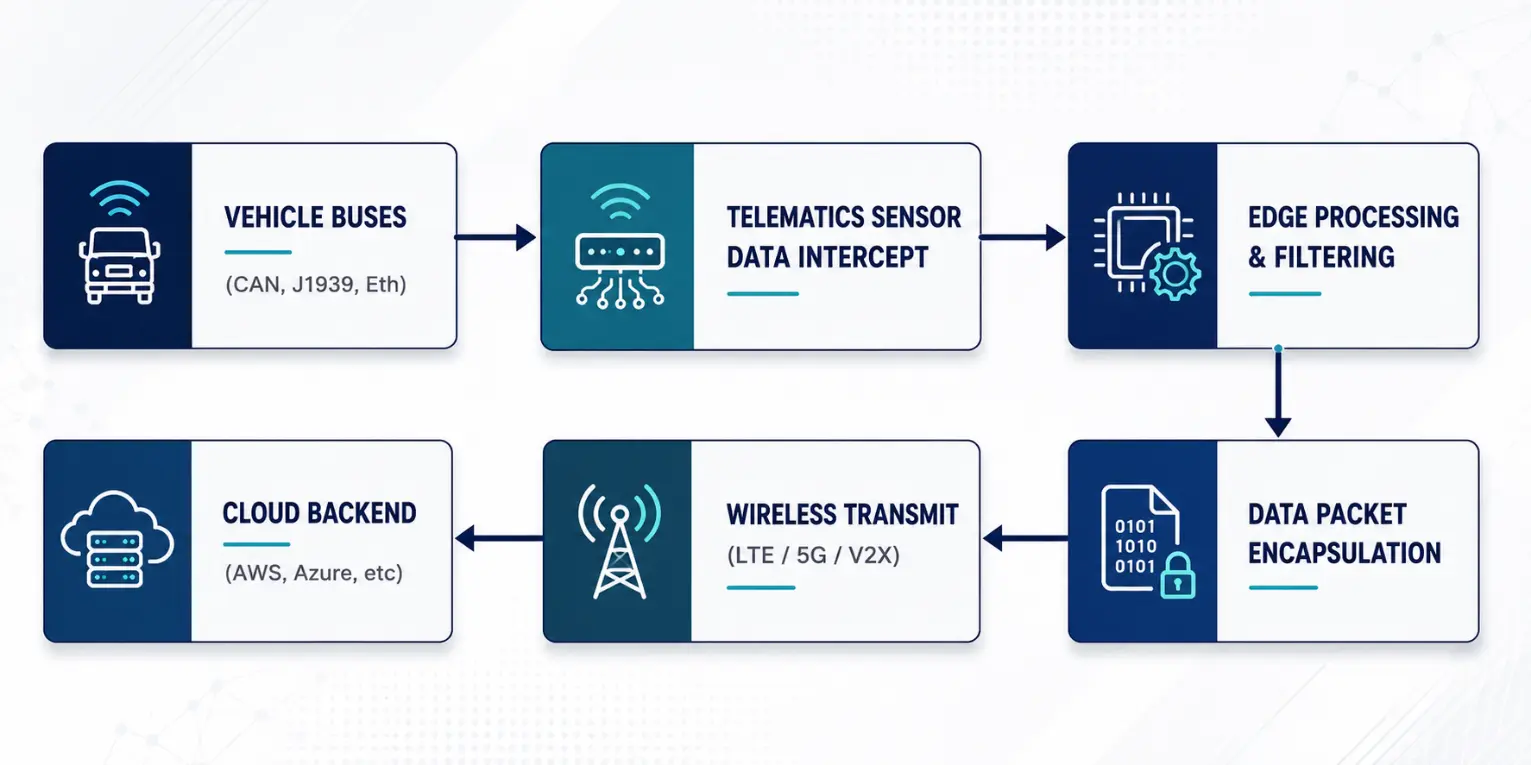
During recent architecture optimization workflows for connected vehicle platforms, engineering teams have highlighted significant data friction points when bridging high-frequency J1939 telematics inputs with localized CAN nodes. Addressing this challenge requires deploying advanced hardware abstraction layers to normalize data transmission without overloading core processing budgets.
-
CAN Bus & J1939 Interfacing: The unit reads hundreds of binary parametric data messages, utilizing custom identifier filters to capture only relevant diagnostic fields.
-
GPS/GNSS Synchronization: Combines dead reckoning technologies with satellite signals to pinpoint vehicle location even within dense urban settings or long subterranean tunnels.
-
The LTE to 5G Shift: Modern deployments utilize 5G Ultra-Reliable Low-Latency Communication (URLLC) modes, enabling instant Vehicle-to-Everything (V2X) warnings that protect pedestrians and support automated driving features.
-
Cloud Platform Provisioning: Utilizes lightweight messaging protocols like MQTT or HTTP/2 to push structured JSON or Protocol Buffer streams directly into cloud architectures for real-time storage and visualization.
Telematics Control Unit Functions
Beyond simple tracking, the modern connectivity controller operates as an active, multi-tasking edge-computing terminal within the vehicle. It simultaneously manages regulatory frameworks, active occupant safety protocols, and operational parameters.
What are the Functions of a Telematics Control Unit?
Telematics Control Unit functions encompass vehicle tracking, localized diagnostics capture, automated emergency response (eCall), driver behavior tracking, and cloud connectivity routing. These features form the foundation for remote fleet tracking, predictive maintenance, and software-driven vehicle upgrades.
Key operational activities managed by the module include:
-
Automated Crash Notification (eCall): In the event of an accident that deploys airbags, the device automatically dials emergency services, transmitting a Minimum Set of Data (MSD) containing the vehicle's location, heading, and fuel type.
-
Remote Asset Control: Translates authorized incoming cloud commands to lock/unlock doors, pre-condition EV cabins, or immobilize stolen vehicles via secure internal commands.
-
Driver Efficiency and Behavior Scoring: Tracks sudden acceleration, harsh braking, and sharp cornering directly from vehicle sensor data to generate driver risk profiles.
Role of TCU in OTA Updates and Remote Vehicle Diagnostics
The emergence of software-defined platforms means that a vehicle's value can improve over time through regular software enhancements. This continuous evolution relies heavily on the connectivity module's capability to safely ingest and flash new software images.
What is the Role of TCU in Diagnostics and OTA?
The role of the TCU in diagnostics and OTA updates is to act as a secure on-board download client and diagnostic master node. It downloads new software packages from cloud servers, validates file integrity, and orchestrates the flashing of updated code to various ECUs.
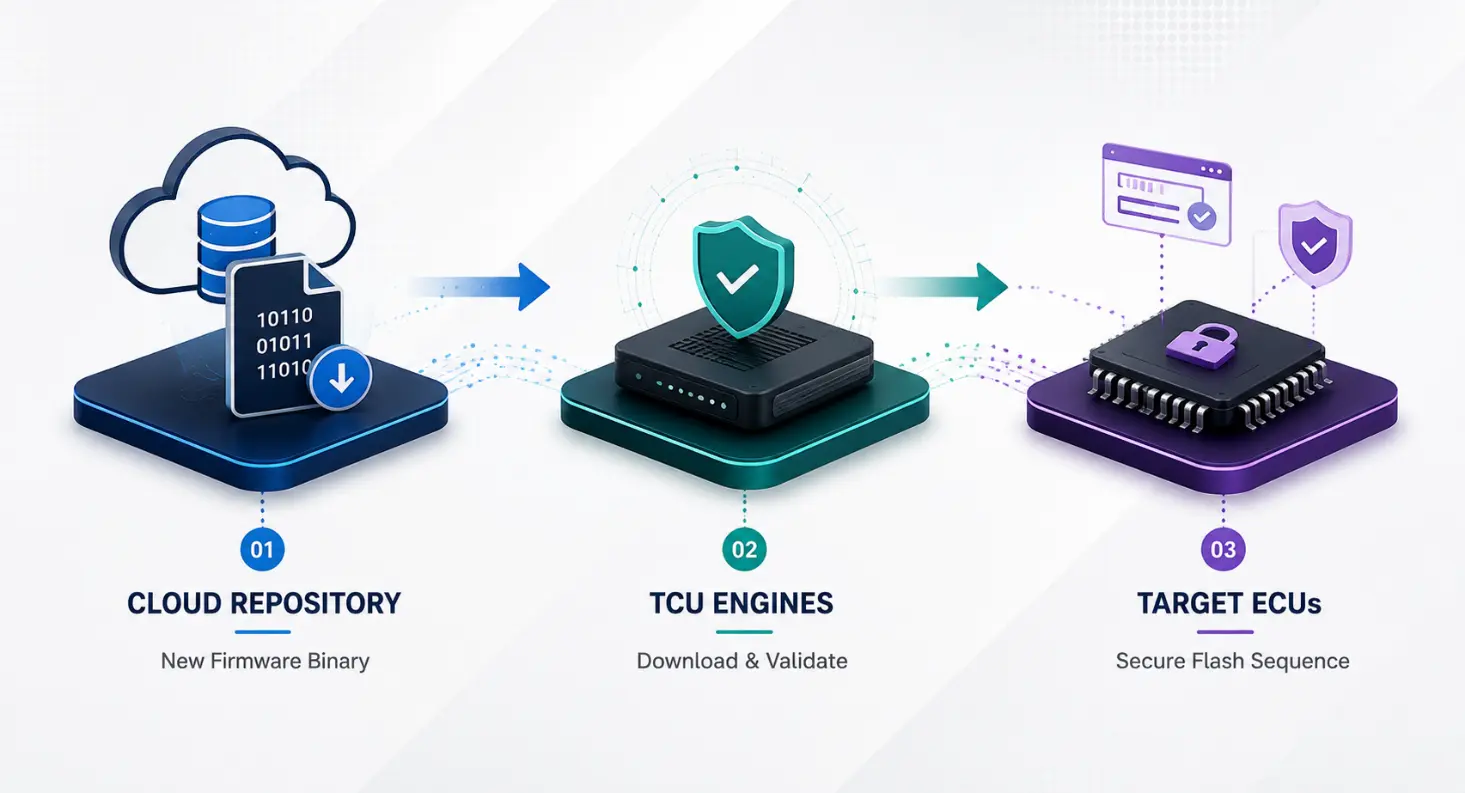
In typical safety-critical automotive environments, managing updates requires a highly reliable coordination approach:
-
Firmware Over-The-Air (FOTA): The unit manages the downloads of low-level ECU operating code, applying complex delta-compression algorithms to minimize cellular data consumption and avoid system errors.
-
Software Over-The-Air (SOTA): Manages application-level adjustments, updates map assets for navigation displays, and patches infotainment code.
-
Edge-Driven Remote Diagnostics: Continuously monitors active emissions and powertrain performance data, flagging transient errors before they trigger dashboard warning lights.
Role of TCU in Connected Vehicle Ecosystems
Looking beyond individual vehicles, the connectivity gateway serves as the vital on-board node that links autonomous assets with smart city ecosystems and automated logistics operations.
What is the Role of a TCU in Connected Vehicles?
The role of a TCU in connected vehicle ecosystems is to translate internal automotive bus protocols into uniform cellular data packages compatible with broader intelligent transportation networks. It enables vehicles to interact dynamically with traffic management hubs, external fleets, and infrastructure elements.
Data published by global research organizations indicates that the cellular vehicle connectivity landscape is scaling at a record pace. According to market sizing reports by Global Market Insights, the global 5G telematics control unit market size is projected to reach $53.2 Billion by 2034, driven by widespread adoption of cellular-V2X (C-V2X) frameworks.
-
Vehicle-to-Infrastructure (V2I): Enables vehicles to receive real-time timing signals from upcoming smart traffic lights, reducing idling time and improving fuel efficiency.
-
Vehicle-to-Vehicle (V2V): Exchanges immediate trajectory data with surrounding cars to provide early warning of blind-spot hazards or sudden hard braking down the line.
Telematics Control Unit Benefits
Investing in high-performance connectivity platforms delivers clear commercial returns and operational advantages across the entire automotive value chain.
What are the Benefits of a Telematics Control Unit?
The benefits of a Telematics Control Unit include significantly lower fleet operating costs, reduced vehicle downtime via predictive maintenance, faster emergency response, and new post-sale software revenue channels for OEMs.
TCU Value Proposition
| OEM BENEFITS | FLEET OPERATIONS |
|---|---|
| OTA Cost Reductions | Optimized Fuel & Energy Usage |
| Data-driven R&D Analytics | Real-time Diagnostic Visibility |
- For Automotive OEMs: Replaces expensive, dealer-managed physical recalls with targeted over-the-air firmware adjustments, saving significant warranty expenses. - For Commercial Fleet Operators: Lowers overall fuel and energy usage by monitoring routing efficiency, tracking idling times, and preventing engine wear through early diagnostic alerts. - For End Users and Drivers: Provides access to real-time traffic navigation, mobile app integration, and faster emergency assistance during unexpected road events.
Challenges in Telematics Control Unit Development
Designing and manufacturing a connectivity system that performs reliably over a fifteen-year vehicle lifecycle introduces significant engineering hurdles. Hardware must endure harsh physical operating conditions while adapting to rapidly changing wireless network standards.
What are the Challenges in TCU Development?
Challenges in TCU development involve designing compact systems that handle high heat generation, maintaining ultra-low power consumption to protect vehicle batteries, and ensuring zero frame drops on data transmissions during weak cellular coverage.
Automotive software engineers focus heavily on resolving these core physical and operational friction points:
-
Thermal Dissipation Management: High-speed 5G data transmission generates significant heat. Units must be carefully engineered without cooling fans, using custom metal housings to transfer heat efficiently away from sensitive microprocessors.
-
Power Consumption Limits: When a vehicle is parked for weeks, the TCU must enter a low-power deep sleep mode while remaining alert for remote wake-up commands without draining the main battery.
-
Network Performance and Coverage Drops: Software designs must include robust edge-storage databases (such as SQLite baselines) to save critical data locally when traveling through cellular dead zones, ensuring automated re-transmission once connections are restored.
Cybersecurity Challenges in Telematics Control Unit Development
Because the connectivity controller acts as the main wireless gateway to the vehicle's internal networks, it represents a primary target for potential cyber threats. Securing this entry point is critical to protecting the safety of the vehicle's passengers and systems.
What are the Cybersecurity Challenges in TCU Design?
Cybersecurity challenges in TCU design involve preventing unauthorized remote access to the internal CAN bus, defending against cellular signal interception, protecting encryption keys, and ensuring secure firmware updates.
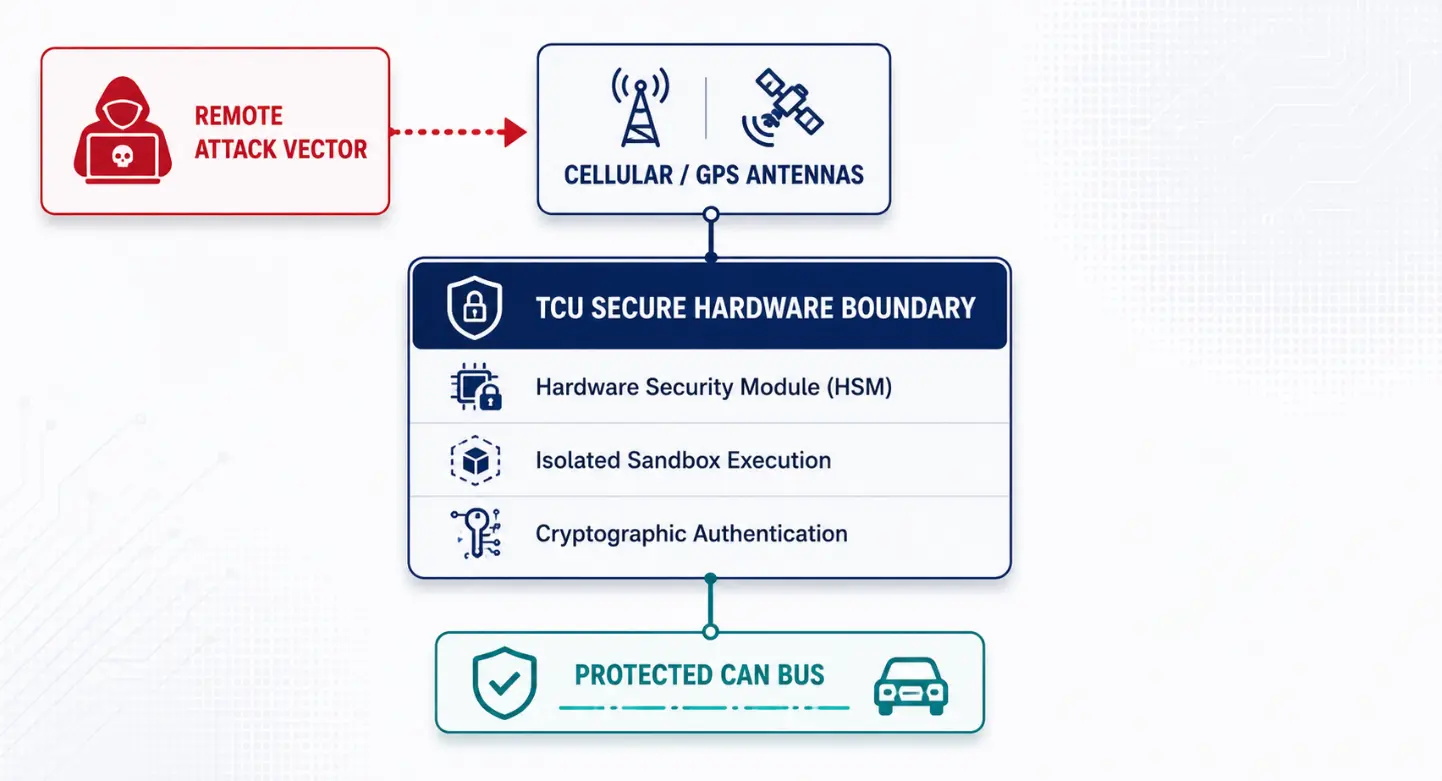
To safeguard connected vehicles, development teams must build defenses directly into the system architecture:
-
Hardware Security Modules (HSMs): Utilizing dedicated hardware security chips to isolate cryptographic key management and encryption engines from the main application software.
-
Secure Boot Protocols: Verifying the cryptographic signature of the operating system during start-up to ensure no unauthorized or altered code can execute on the device.
-
Network Segmentation and Firewalls: Configuring strict data-routing rules that isolate public-facing cellular components from safety-critical braking or steering control nodes.
Engineering a Future-Ready TCU: The OptM Approach
Overcoming these complex engineering, connectivity, and security challenges requires moving past generic off-the-shelf components toward customized, production-ready vehicle architectures.
When managing complex telemetry profiles and demanding edge-processing requirements, leading OEMs and Tier 1 suppliers deploy solutions like OptM’s Telematics Control Unit to safely bridge vehicle networks with enterprise cloud platforms.
THE OptM ADVANTAGE
| Embedded Linux Expertise | Advanced Edge Computing | Automotive-Grade Security |
|---|---|---|
Architectures optimized for speed, scalability, and system stability. | Intelligent edge-processing engines that reduce bandwidth usage and lower data transmission costs. | Secure communication frameworks engineered to meet automotive safety and cybersecurity requirements. |
By combining extensive expertise in automotive software engineering, real-time operating systems (RTOS), embedded Linux, and robust CAN/J1939 protocol integration, OptM designs systems built for next-generation transportation demands. Whether managing advanced commercial transport tracking or supporting electric vehicle powertrain diagnostics, OptM's engineering teams provide the complete support needed from initial hardware configuration to final cloud integration.
Conclusion
The Telematics Control Unit has transformed from a simple GPS tracking device into the essential computing node that enables software-defined vehicles and connected fleets. As data requirements increase and 5G networks expand, selecting a dependable connectivity infrastructure becomes a critical competitive choice for modern automotive organizations.
For engineering executives and product managers developing future vehicle architectures, selecting the right hardware platform is essential to long-term scalability. Discover how our production-ready connected mobility solutions can accelerate your product timelines, by visiting the OptM Telematics Control Unit Product Page.
Frequently Asked Questions
Is a TCU fundamentally different from a standard GPS fleet tracker?
Yes. While a GPS tracker only receives satellite signals to transmit location, a TCU is a deeply integrated communication gateway. It physically connects to the vehicle's CAN bus to extract engine diagnostics, execute remote bidirectional commands, and orchestrate firmware updates.
Do TCUs require a constant cellular connection to function?
No. Automotive-grade TCUs feature "store-and-forward" architecture. If the vehicle enters a cellular dead zone, the TCU relies on internal flash memory to queue the telemetry data, automatically executing a bulk burst-upload the exact moment the network connection is restored.
Will a TCU drain the vehicle's battery if parked for weeks?
No, provided it has an automotive-grade Power Management IC (PMIC). The PMIC drops the TCU into a micro-amp deep sleep state when the ignition turns off, leaving only a tiny microcontroller awake to listen for remote wake-up pings without draining the 12V battery.
How does a TCU interface with legacy vehicles that don't have ethernet?
For older or aftermarket applications, TCUs are designed to interface directly via the OBD-II diagnostic port or through direct wire-taps into the standard CAN-High/CAN-Low lines, translating legacy protocols into modern cloud payloads.
Who ultimately owns and secures the data generated by the TCU?
Data sovereignty depends on the architectural setup, but typically the raw telemetry is encrypted by the TCU and owned by the OEM or fleet operator. It is secured using TLS 1.3 tunnels and processed in private enterprise clouds.
Can a TCU operate on both 4G LTE and 5G networks?
Yes, modern TCUs utilize multi-band cellular modems with fallback capabilities. They prioritize high-speed 5G Standalone networks for low-latency tasks but will automatically downgrade to 4G LTE or Cat-M1 if 5G coverage drops.
What is the typical lifespan of a factory-installed TCU?
Unlike consumer electronics, OEM TCUs are engineered for a 10 to 15-year lifecycle. They use industrial-grade silicon designed to withstand extreme thermal cycles and rely on decoupled software architectures to remain updatable over the vehicle's lifespan.