
Content Writer & SEO Specialist
Content Writer & SEO Specialist
Aditya Sharma is a content writer at OptM Solutions specializing in automotive electronics, embedded systems, telematics, electric vehicle technologies, connected mobility, and autonomous driving technologies.
LinkedIn ProfileIn the fiercely competitive landscape of modern mobility, original equipment manufacturers (OEMs) and Tier-1 electronics suppliers are executing a fundamental paradigm shift. The automotive industry is rapidly transitioning away from legacy, hardware-centric vehicle manufacturing toward the deployment of Software-Defined Vehicles (SDVs). At the very core of this structural evolution sits the digital cockpit—a centralized, high-performance domain controller that has entirely replaced the fragmented, decentralized dashboards of the past.
This transition is not merely a design trend; it is a critical commercial mandate driven by consumer expectations, safety regulations, and the need for scalable software monetization. According to a comprehensive industry analysis by Precedence Research, the global automotive infotainment market is projected to reach approximately USD 43.43 billion by 2032, expanding at a solid compound annual growth rate (CAGR) of 7.3% as automakers aggressively scale their connected, software-defined vehicle investments. This explosive growth underscores a singular reality: the infotainment unit is no longer a peripheral accessory for media playback. It is the centralized intelligence hub of the vehicle, generating massive operational value for automakers, commercial fleet managers, and end-consumers alike.
To truly understand why the world's largest automotive conglomerates are investing billions into advanced cockpit architectures, one must look past the consumer-facing touchscreens and analyze the systemic, long-term commercial advantages these platforms provide. Before exploring the economic and technical advantages of these platforms, engineering teams should establish a foundational understanding by reading our definitive pillar guide outlining exactly What Is Infotainment System technology in the context of the 2026 SDV ecosystem.
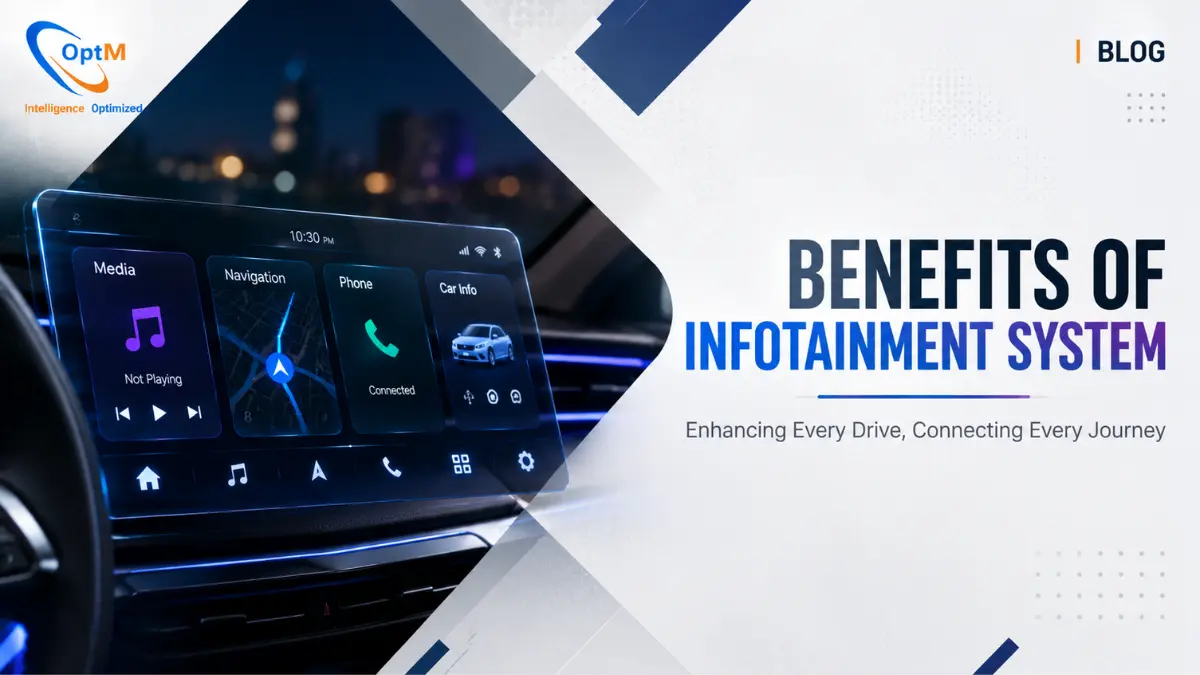
In this comprehensive technical deep-dive, we will dissect the multifaceted Benefits of Infotainment System architectures. We will explore how these high-performance edge computing nodes allow OEMs to slash manufacturing costs through hardware consolidation, how they empower fleet operators with predictive maintenance telematics, and how they drastically elevate passenger safety through seamless integration with Advanced Driver Assistance Systems (ADAS).
What Are the Benefits of an Infotainment System?
The primary benefits of an infotainment system include hardware consolidation, which reduces bill-of-materials (BOM) costs, and the enablement of recurring software monetization via Over-the-Air (OTA) updates. By operating as a centralized domain controller, it enhances vehicle safety through real-time ADAS visualization, optimizes EV routing via cloud telematics, and provides commercial fleets with predictive diagnostic intelligence, significantly reducing vehicle lifecycle depreciation and unexpected maintenance downtime.
To understand how a single computing unit executes this massive value proposition, engineering teams must dive deep into the microscopic data pipelines that dictate exactly How Does Infotainment System Work at the silicon and network levels.
1. OEM Benefits: Post-Sale Monetization and Feature-on-Demand (FoD)
For over a century, the automotive business model was linear and static: an OEM manufactured a vehicle, sold it to a dealership, and the transaction was functionally complete. The vehicle immediately began depreciating, and the OEM captured very little downstream revenue outside of proprietary replacement parts. The integration of advanced infotainment architectures has completely shattered this legacy model, transforming the vehicle from a depreciating hardware asset into a dynamic, appreciating software platform.
The Over-the-Air (OTA) Revenue Pipeline
Modern infotainment systems act as the secure gateway to the cloud. By leveraging an embedded Telematics Control Unit (TCU) equipped with 5G connectivity, the central domain controller can download, decrypt, and install new software capabilities long after the vehicle has left the assembly line. This completely alters the vehicle's lifecycle value.
Instead of forcing a consumer to buy a new car to access the latest navigation algorithm or an improved battery management profile, OEMs can push these enhancements over the air. This capability unlocks the highly lucrative "Feature-on-Demand" (FoD) or subscription-based revenue model. For instance, a vehicle can be manufactured with all the necessary hardware sensors for Level 3 autonomous driving, but the software to enable it can be locked behind a paywall. The consumer can choose to subscribe to the "Highway Autopilot" feature for a monthly fee via the infotainment screen. This shifts the OEM revenue model from a single point-of-sale transaction to a continuous, high-margin software-as-a-service (SaaS) pipeline that generates yield for the entire decade the vehicle is on the road.
Accelerating Go-To-Market via Software Abstraction
Developing the software ecosystem required to manage these subscriptions demands rigorous architectural discipline. The Role of Embedded Software in Infotainment System development allows automakers to decouple their software lifecycles from their hardware manufacturing cycles. By utilizing a Vehicle Hardware Abstraction Layer (VHAL), an OEM can write a single, unified Android Automotive OS (AAOS) application and deploy it across their entire global fleet—from a compact hatchback to a heavy-duty commercial truck—without needing to rewrite the code for different underlying electronic control units (ECUs). This massive reduction in software duplication dramatically accelerates time-to-market for new digital features.
2. Engineering Benefits: Hardware Consolidation and BOM Reduction
From a Tier-1 implementation workflow and OEM manufacturing perspective, adding more features to a vehicle traditionally meant adding more physical ECUs. This decentralized approach led to an engineering crisis. Modern luxury vehicles became burdened with over 100 disparate ECUs, connected by miles of heavy, expensive copper wiring harnesses that severely impacted fuel efficiency and complicated assembly line manufacturing.
The Cockpit Domain Controller (CDC) Paradigm
The most immediate structural benefit of modern Infotainment System Architecture is absolute hardware consolidation. By deploying a centralized Cockpit Domain Controller (CDC), engineers can absorb the functions of dozens of separate ECUs into a single, high-performance System-on-Chip (SoC).
A modern automotive SoC features a heterogeneous architecture. It houses high-speed ARM Cortex-A application processors alongside secure, lockstep Cortex-R real-time safety cores. By leveraging a Type-1 Hypervisor (such as QNX Hypervisor), the system can run multiple operating systems concurrently on the exact same piece of silicon. This means the infotainment media player, the digital instrument cluster, the heads-up display (HUD), and the telematics gateway all operate from one central computer rather than four separate physical boxes.
Reducing Weight, Cost, and Thermal Complexity
This consolidation yields massive downstream manufacturing benefits. By eliminating redundant microcontrollers, plastic enclosures, power supplies, and the massive copper wiring harnesses required to connect them, OEMs drastically reduce their overall Bill-of-Materials (BOM) cost. Furthermore, shedding pounds of copper wiring directly improves the vehicle's curb weight, which is a critical metric for extending the maximum driving range of electric vehicles.
Managing this consolidation requires highly specific physical components. Procuring the right memory architectures (like UFS 3.1) and automotive-grade display panels is critical, which is why engineering procurement teams must deeply understand the Components of an Infotainment System to ensure the consolidated system does not suffer from thermal throttling or memory bandwidth starvation.
3. Commercial Fleet Benefits: Predictive Maintenance and Telematics Intelligence
While consumer multimedia gets the most marketing attention, the most profound financial Benefits of Infotainment System architectures are realized in the commercial fleet and logistics sectors. For a commercial trucking enterprise or a rental car agency, vehicle downtime is the enemy of profitability. If a heavy-duty truck suffers a catastrophic transmission failure on the highway, the costs associated with towing, delayed freight penalties, and emergency repairs are immense.
Continuous Telemetry Extraction
A modern infotainment domain controller acts as an intelligent edge-computing node that continuously monitors the health of the vehicle. Through direct integration with the vehicle's Controller Area Network (CAN FD) backbone, the system reads thousands of diagnostic trouble codes (DTCs), thermal profiles, and fluid pressure metrics every second.
Rather than waiting for a "check engine" light to illuminate on the dashboard, the system encrypts this granular telemetry and transmits it via the 5G TCU using lightweight MQTT protocols directly to the fleet manager's enterprise cloud dashboard.
Predictive Edge Analytics
By analyzing this data stream using machine learning models, fleet operators can shift from reactive maintenance to predictive maintenance. If the system detects a microscopic degradation in the voltage curve of a specific EV battery cell over a 30-day period, it flags the anomaly. The fleet manager can route that specific vehicle to a service center for a proactive cell replacement during a scheduled driver rest period, entirely preventing a costly roadside breakdown. The ability to guarantee vehicle uptime transforms the digital cockpit from an engineering cost center into a massive operational asset.
4. Consumer Benefits: Enhanced Safety via ADAS and DMS Integration
In safety-critical automotive environments, the infotainment screen is the primary visual interface for preventing accidents. As vehicles advance toward Level 2+ and Level 3 autonomy, the driver must maintain absolute situational awareness.
Prioritized Visual Overlays
The modern infotainment system is not a passive display; it is deeply intertwined with the vehicle's autonomous systems. This requires mastering Infotainment System Integration with ECUs, Sensors, Displays and Connectivity Modules. When an external millimeter-wave radar detects a sudden obstruction on the highway, that data is pushed over high-speed Automotive Ethernet (utilizing Time-Sensitive Networking protocols to guarantee microsecond delivery) to the central infotainment SoC.
The system's Real-Time Operating System (RTOS) instantly overrides the consumer media applications. The graphics processing unit (GPU) interrupts its current render cycle, flashes a high-contrast emergency braking warning across the digital instrument cluster and the central display, and commands the audio Digital Signal Processor (DSP) to blast an intrusive acoustic warning through the cabin speakers.
Integrated Driver Monitoring Systems (DMS)
The safety benefits extend inward as well. Modern architectures increasingly embed neural processing units (NPUs) into the infotainment SoC to handle edge-AI workloads, such as integrated Driver Monitoring Systems. A near-infrared camera on the steering column streams video to the infotainment system, which runs computer vision algorithms to track the driver's gaze vectors and blink frequency. If the system detects acute drowsiness (microsleep) or smartphone distraction, the infotainment unit intervenes immediately, ensuring the human operator remains engaged in the driving task.
Because executing these safety-critical interventions without latency is a matter of life and death, OEMs subject these platforms to brutal Infotainment System Testing and Validation regimens, complying strictly with ISO 26262 functional safety standards before the software is ever allowed on public roads.
5. UI/UX Benefits: Cognitive Load Reduction and Personalization
Historically, interacting with vehicle settings required drivers to take their eyes off the road to navigate complex grids of physical buttons or deeply buried touchscreen menus. This caused severe cognitive overload and increased the risk of distracted driving accidents.
Executive Minimalism and Distraction-Free Design
The primary benefit of modern Infotainment System UI/UX Design is the aggressive reduction of this cognitive burden. In premium B2B and SDV deployments, automotive interface architects reject cluttered, sci-fi-inspired 3D graphics that overwhelm the senses. Instead, they rely on clean, executive minimalism.
By utilizing advanced frameworks like the Qt Scene Graph, engineers render interfaces at a flawless 60 frames per second. Layouts are strictly governed by high-contrast visual hierarchies. Critical safety information is presented cleanly against dark, distraction-free backgrounds, utilizing precise, brand-aligned primary accent colors to immediately draw the eye only when necessary. This ensures that a driver can glance at the screen, extract the necessary telemetry (like current EV range or navigation routing), and return their eyes to the road in less than a second.
Natural Language Processing (NLP)
Furthermore, the integration of advanced voice recognition capabilities allows drivers to bypass the touchscreen entirely. By leveraging edge-based AI natural language processing, a driver can simply speak conversational commands (e.g., "I'm cold, lower the temperature and navigate to the nearest fast charger"). The infotainment system's middleware parses the intent and executes the commands across the CAN bus and cloud navigation APIs simultaneously, allowing the driver to keep their hands firmly on the steering wheel.
6. EV Ecosystem Optimization: Range Anxiety Mitigation
For the rapidly expanding electric vehicle (EV) market, the infotainment system is the ultimate cure for "range anxiety." An internal combustion engine vehicle can be refueled anywhere in five minutes; an EV requires strategic route planning based on battery chemistry, ambient temperature, and charging station availability.
Intelligent Charge-Aware Routing
The system synthesizes all the core Functions of Infotainment System—telemetry, navigation, and cloud connectivity—to manage the EV powertrain. The central domain controller continuously polls the Battery Management System (BMS) to determine the exact state-of-charge, the degradation curve of the cells, and the energy draw of the cabin HVAC system.
It fuses this mechanical data with real-time cloud navigation routing. If the driver inputs a destination that exceeds the current battery range, the system automatically queries backend charging networks using Open Charge Point Protocol (OCPP) standards. It identifies high-speed DC fast chargers along the route, verifies that the charging stalls are currently unoccupied and functional, and adds them as waypoints. Crucially, as the vehicle approaches the charging station, the infotainment system issues a command over the CAN bus to the thermal management ECU, instructing it to pre-condition (heat or cool) the battery pack to the exact optimal temperature required to accept the maximum charging wattage upon arrival, drastically reducing the driver's wait time at the plug.
7. Navigating the Complexities of Deployment
While the benefits of transitioning to a centralized domain controller are immense, the engineering journey is not without friction. OEMs must confront massive Challenges in Infotainment System Development.
Transitioning to a software-defined architecture requires mastering Service-Oriented Architectures (SOA), such as AUTOSAR Adaptive, to ensure that software components from different Tier-1 vendors can communicate flawlessly over Automotive Ethernet. Furthermore, engineers must solve intense thermal dissipation challenges, as running high-performance processors in the confined space of a vehicle dashboard generates significant heat that must be managed passively through specialized PCB layouts and massive aluminum heatsinks to prevent the system from thermal throttling during a critical drive cycle.
8. Real-World Workflow Example: A Fleet Operator Mitigating Catastrophic Failure
To truly crystallize the commercial and operational value of these systems, we must observe their benefits deployed in a real-world edge case. Let us map the exact workflow of an intelligent infotainment architecture preventing a catastrophic engine failure in a commercial logistics fleet.
1. Continuous Edge Polling (Telemetry Layer):
A heavy-duty commercial truck is traveling at highway speeds. The central infotainment domain controller is continuously polling the powertrain ECUs over the CAN FD network at a rate of 100 times per second.
2. Anomaly Detection (Diagnostic Layer):
The Vehicle Hardware Abstraction Layer (VHAL) ingests a localized data packet indicating a slight, but persistent, drop in engine oil pressure. This drop has not yet crossed the hardcoded threshold to trigger the analog "check engine" light, but it deviates from the expected operational matrix.
3. Cloud Transmission (Telematics Layer):
The infotainment system packages this anomaly into an encrypted, lightweight MQTT JSON payload. Using its embedded 5G Telematics Control Unit (TCU), it transmits this telemetry instantly to the commercial fleet operator’s enterprise cloud backend.
4. Predictive Analytics (Enterprise Layer):
The fleet operator's cloud-based machine learning model analyzes the oil pressure curve against historical failure data. The AI determines that the oil pump gasket is actively degrading and will fail catastrophically within the next 400 miles, which would result in a blown engine and a $25,000 repair bill.
5. Proactive Intervention (Routing Layer):
The fleet manager’s automated system sends an urgent OTA command back to the truck's infotainment unit. The infotainment system interrupts the driver's current navigation route, rendering a high-contrast alert on the central display instructing the driver to pull into a specific service depot located just 15 miles ahead along the current route.
6. Seamless Resolution:
The driver arrives safely at the depot. The service technicians, already alerted by the cloud system, immediately replace the failing $50 gasket.
Through the invisible, synchronized execution of telematics, edge diagnostics, and dynamic routing, the infotainment system transformed a guaranteed $25,000 catastrophic engine failure and days of delayed freight into a minor, 45-minute scheduled maintenance stop. This single event pays for the entire cost of the vehicle's advanced electronic architecture tenfold.
Final Thoughts: The Strategic Value of the Digital Cockpit
The benefits of a modern automotive infotainment system extend far beyond the immediate luxury of high-definition touchscreens and premium cabin acoustics. For automakers, it is the fundamental enabler of post-sale software monetization and massive hardware consolidation. For commercial fleets, it is an intelligent edge-computing node that guarantees operational uptime. For the everyday driver, it is a vigilant co-pilot that optimizes EV charging routes and intervenes instantly to prevent collisions.
Transitioning to this level of software-defined intelligence requires absolute architectural discipline. It requires an engineering partner capable of navigating the microscopic complexities of silicon virtualization, secure telematics pipelines, and flawless UI/UX graphics rendering under the harshest environmental constraints.
For Tier-1 suppliers, procurement heads, and original equipment manufacturers aiming to integrate this transformative commercial and operational value into their next-generation vehicle platforms, it is critical to explore the comprehensive, production-ready engineering capabilities embedded within the Automotive Infotainment System engineered by OptM Solutions.
Frequently Asked Questions (FAQs)
What is "Feature-on-Demand" (FoD), and how does it generate OEM revenue?
FoD allows automakers to build vehicles with advanced hardware, but lock features (like premium navigation or highway autopilot) behind software paywalls. Users can subscribe to these features via the infotainment system, creating recurring, post-sale software revenue for the OEM.
How does predictive maintenance through telematics save commercial fleets money?
By continuously streaming edge-processed CAN bus diagnostic data to the cloud, machine learning models can detect microscopic part degradation (like a failing oil pump) weeks before it breaks. Fleet managers can schedule repairs proactively, eliminating costly roadside breakdowns and downtime.
Why does hardware consolidation reduce the vehicle's overall bill-of-materials (BOM)?
By replacing 10 disparate electronic control units (ECUs) with one centralized Cockpit Domain Controller, OEMs eliminate redundant microcontrollers, plastic housings, power supplies, and massive amounts of heavy copper wiring, drastically reducing manufacturing costs.
How does natural language processing (NLP) reduce driver cognitive load?
Edge-based NLP allows the driver to issue conversational commands (e.g., "I'm cold") without memorizing rigid scripts or looking away from the road to navigate touch menus, keeping their visual and manual attention entirely on driving.
How do OTA updates prevent vehicle depreciation?
Historically, a car's technology aged immediately after purchase. OTA updates allow the infotainment system to receive entirely new UI designs, improved battery algorithms, and new app integrations, ensuring the vehicle's digital experience remains modern for a decade.
How does reducing the wiring harness weight benefit EVs?
The copper wiring harness is one of the heaviest components in a vehicle. By shifting to a centralized domain architecture and Automotive Ethernet, OEMs strip tens of pounds of copper from the chassis, directly improving the maximum driving range of the EV.
How does the system elevate passenger safety during an ADAS event?
Because the infotainment system is integrated with the ADAS domain, it can execute multimodal interventions. During a collision threat, it instantly mutes media audio, blasts a localized warning chime, and flashes a high-contrast visual alert on the cluster, drastically reducing driver reaction time.