Engineering & Innovation Team
Engineering & Innovation Team
OptM Solutions delivers industry-leading engineering, product development, and software integration services for automotive, broadcast, defense, healthcare, and EV platform ecosystems.
LinkedIn ProfileImagine a commercial truck moving at highway speeds. The driver has been on the road for eight hours. Slowly, without the driver even realizing it, their blink rate slows down, and their head begins to nod.
In a traditional vehicle, this scenario often ends in a catastrophic collision. But in a modern vehicle equipped with intelligent cabin sensors, the onboard computer recognizes the physiological signs of fatigue milliseconds before the driver actually falls asleep. The system triggers a sharp auditory warning, waking the driver and preventing the accident.
This is no longer science fiction. Driver safety has permanently shifted from reactive crash protection—like seatbelts and airbags—to proactive crash avoidance.
For automotive engineers and fleet operators, deploying these intelligent systems is no longer just a luxury. It is a strict operational necessity. Let's break down exactly what this technology achieves and the core benefits it provides to both manufacturers and commercial operators.
What is a Driver Monitoring System (DMS)?
A Driver Monitoring System is an advanced automotive safety technology that uses interior-facing infrared cameras and edge-based AI to continuously track a driver's face and eyes.
By calculating metrics like blink duration, gaze direction, and head posture, the system detects signs of cognitive distraction or severe drowsiness. It then triggers immediate dashboard alerts to refocus the driver's attention on the road.
8 Core Benefits of a Driver Monitoring System
1. Temporal Fatigue Calculation (PERCLOS Analysis)
Standard drowsiness tracking requires far more than checking for closed eyes. The system calculates PERCLOS (Percentage of Eye Closure) over a moving temporal window, evaluating image frames at 60Hz to measure exact eyelid margins.
If the eyelids cover the pupil diameter for more than 80% of a defined time block, the ECU registers a micro-sleep. To understand the algorithmic thresholds separating natural blinks from severe fatigue, engineers must analyze How Driver Monitoring Systems Detect Drowsiness and Distraction in dynamic cabin environments.
2. 3D Gaze Vector Mapping for Visual Distraction
To detect when a driver looks down at a phone, the software does not just track head movement; it calculates a precise 3D gaze vector. It triangulates the geometric center of the pupil against the corneal reflection created by the NIR LEDs.
This vector is mapped against a pre-calibrated spatial matrix representing the safe forward windshield zone. If the gaze vector breaks this boundary for more than 2.0 consecutive seconds, the embedded software instantly flags a critical visual distraction event.
3. Spatial Head Pose Estimation for Cognitive Disconnect
Cognitive distraction occurs when a driver's eyes are open, but their brain is disconnected from the driving task. To detect this, the system solves the Perspective-n-Point (PnP) problem to build a dynamic 3D geometric mesh of the driver's face.
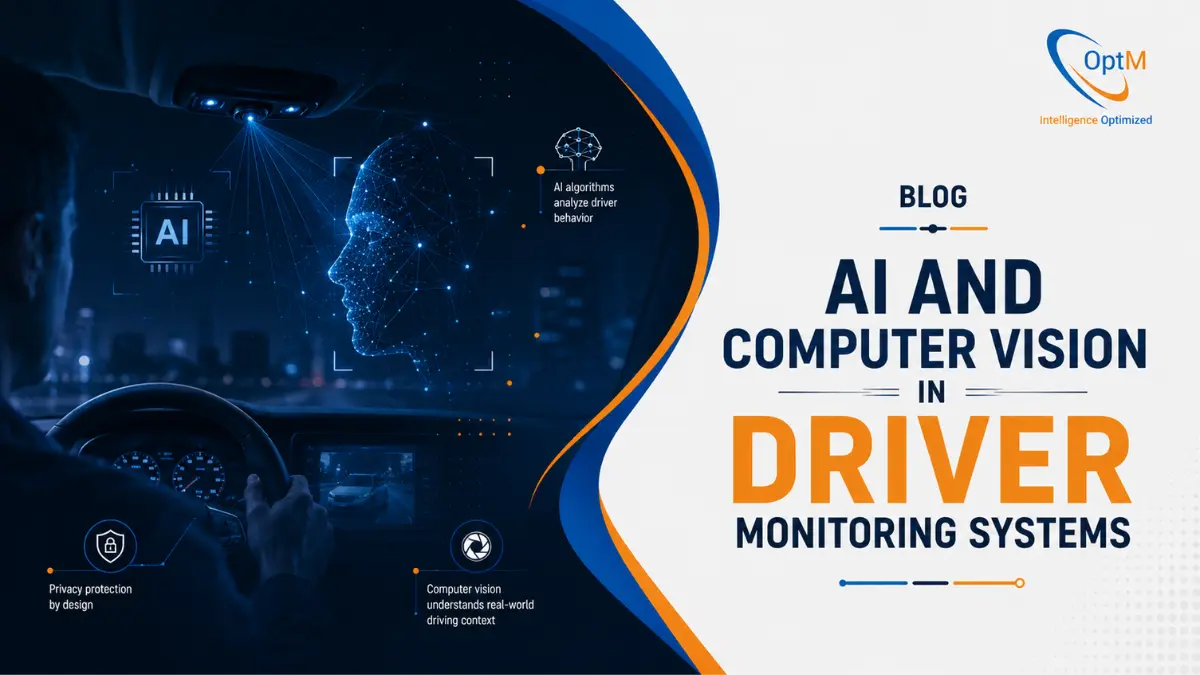
By constantly tracking the X, Y, and Z axes—Pitch (nodding), Yaw (turning), and Roll (tilting)—the software calculates rigid staring patterns or unnatural slumping. Advanced AI and Computer Vision in Driver Monitoring Systems process these spatial matrices to infer cognitive impairment or sudden medical distress.
4. Deterministic HMI Warning Escalation
A monitoring system must convert mathematical detection into immediate localized action. When an anomaly is confirmed, the ECU generates a diagnostic command flag and transmits it across the vehicle's CAN or J1939 communication buses.
This triggers a tiered response sequence on the vehicle's Qt-based digital instrument cluster. It initiates a subtle visual warning, escalating within milliseconds to high-frequency auditory chimes and haptic seat interventions if the driver's gaze vector does not immediately correct.
5. Sensor Fusion and ADAS Handover
In a fully integrated safety ecosystem, the interior camera acts as a contextual data layer for the vehicle's exterior radars. By calibrating the exact handshake between DMS and ADAS, the internal system prepares the exterior modules for an impending failure.
If the DMS detects a severely distracted driver while the forward radar detects stopped traffic, it can instruct the Autonomous Emergency Braking (AEB) module to lower its intervention threshold, engaging the brakes significantly earlier than usual.
6. High-Frequency Edge Processing Execution
Transmitting high-resolution video to the cloud for analysis introduces unacceptable latency during emergency braking scenarios. To solve this, all facial landmark extraction and neural network calculations are executed directly on the local automotive-grade SoC.
By optimizing the specific Components of Driver Monitoring System architecture, engineers ensure these heavy compute loads run efficiently within the ECU's strict thermal limits. Raw video frames are processed in volatile memory and immediately wiped, maintaining absolute data privacy.
7. Secure Telematics and Fleet Risk Logging
While the raw video is destroyed at the edge, the calculated behavioral telemetry remains highly valuable for commercial operators. During a critical event, the system compresses the coordinate data and routes it to the onboard Telematics Control Unit (TCU).
The TCU then transmits these structured risk logs over high-speed LTE networks to an enterprise cloud backend. This enables fleet safety officers to analyze driver risk scores and deploy targeted coaching without requiring continuous, bandwidth-heavy video streaming.
8. Biometric Driver Profiling and ECU Synchronization
Beyond active safety, facial landmark mapping provides a secure biometric authentication layer for the vehicle. When the operator enters the cabin, the system cross-references the 3D facial mesh against authorized driver profiles.
Once authenticated, the DMS transmits synchronization commands across the vehicle network. This automatically adjusts seat positions, mirrors, and climate controls to the specific operator, showcasing the broader capabilities of a deeply integrated Driver Monitoring System Architecture.
Key Benefits for Automotive OEMs
For Original Equipment Manufacturers (OEMs), integrating this technology is primarily about regulatory compliance and market positioning.
Achieving 5-Star Safety Ratings
Global safety bodies are raising the bar. The Euro NCAP 2026 testing protocols severely penalize new vehicles that do not include direct driver monitoring. Integrating these systems is the only way OEMs can secure coveted 5-star safety ratings and remain competitive in the passenger and commercial markets.
Software-Defined Brand Value
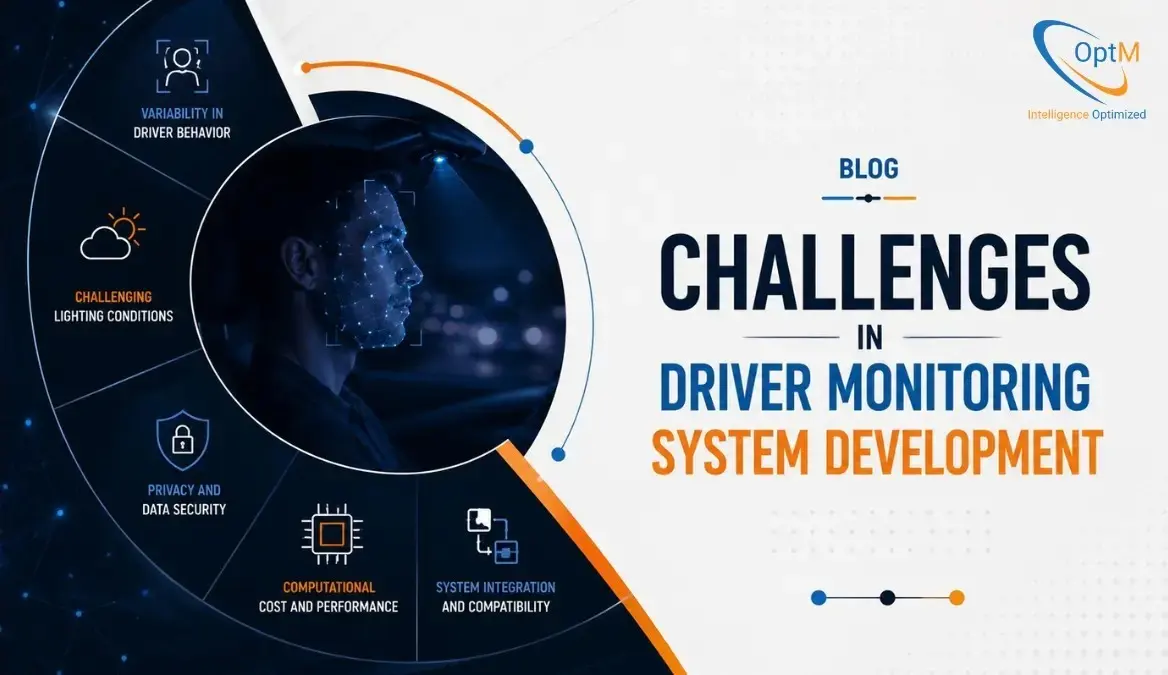
Modern buyers expect their vehicles to act like intelligent devices. By overcoming the standard Challenges in Driver Monitoring System Development—such as thermal management and ECU integration—OEMs deliver a premium, software-defined vehicle that actively protects its occupants.
Seamless Vehicle Architecture
Unlike aftermarket dashcams, OEM-grade systems communicate directly over the vehicle's CAN or J1939 network. This deep integration allows the DMS to display warnings natively on the digital instrument cluster, creating a cohesive and factory-clean user experience.
Key Benefits for Commercial Fleets
For logistics operators and commercial fleets, the benefits are heavily tied to financial protection and operational efficiency.
Significant Insurance Reductions
Commercial insurance premiums for heavy fleets are astronomical. Fleet operators who install active monitoring systems can provide insurers with objective data proving they are mitigating risk. This proactive safety posture frequently results in massive reductions in annual insurance costs.
Lowering Asset Downtime
A single collision can pull a commercial truck off the road for weeks, resulting in delayed deliveries and lost revenue. By preventing fatigue-related crashes before they happen, fleets keep their assets moving and maintain their operational schedules.
Targeted Driver Coaching
Instead of giving every driver the same generic safety lecture, fleet managers can use the telematics data to provide targeted coaching. If a specific driver is consistently flagged for mobile phone distraction, management can address that exact behavior directly.
Frequently Asked Questions
Does a driver monitoring system record me while I drive?
No. In production-grade automotive environments, the system processes visual data instantly on the vehicle's computer and discards the images. It tracks mathematical coordinates, not video recordings.
Can the system see my eyes if I wear sunglasses?
Yes. The cameras use Near-Infrared (NIR) technology, which easily penetrates polarized and tinted sunglass lenses to track pupil movement accurately.
How does DMS help with fleet insurance?
Insurance companies lower premiums for fleets that use active accident prevention. DMS proves the fleet is proactively stopping crashes in real-time, rather than just recording them on a dashcam after they happen.
Engineering the Future of Automotive Safety
Transitioning from a basic prototype to a highly reliable, production-ready safety system requires incredible precision. Understanding the complete Driver Monitoring System Architecture is vital for ensuring your sensors, ECUs, and vehicle networks communicate flawlessly without lag.
At OptM, we specialize in delivering end-to-end embedded engineering, automotive software, and connected mobility solutions for OEMs and enterprises. Our teams build highly scalable, intelligent systems capable of processing real-time edge analytics while maintaining strict automotive-grade reliability.
Integrating a production-grade safety architecture demands rigorous expertise in edge AI, low-latency processing, and seamless vehicle network integration. Explore how OptM's Driver Monitoring System solutions can streamline your engineering lifecycle and accelerate deployment for your next-generation platforms.