
Content Writer & SEO Specialist
Content Writer & SEO Specialist
Aditya Sharma is a content writer at OptM Solutions specializing in automotive electronics, embedded systems, telematics, electric vehicle technologies, connected mobility, and autonomous driving technologies.
LinkedIn ProfileDriver distraction and fatigue remain among the most significant contributors to road accidents worldwide. As vehicles become increasingly connected, intelligent, and software-defined, ensuring that the driver remains attentive is no longer just a safety recommendation—it has become a critical requirement for modern mobility.
A Driver Monitoring System (DMS) is one of the most important technologies addressing this challenge. Using AI-powered cameras, computer vision algorithms, and real-time behavioral analysis, DMS solutions continuously assess driver attentiveness and can detect signs of drowsiness, distraction, or unsafe behavior before they lead to dangerous situations.
From passenger vehicles and commercial fleets to electric vehicles and advanced driver assistance systems (ADAS), Driver Monitoring Systems are becoming a core component of next-generation automotive safety architectures.
According to the National Highway Traffic Safety Administration, distracted driving continues to contribute to thousands of roadway fatalities annually, highlighting the need for technologies that actively monitor driver attention.
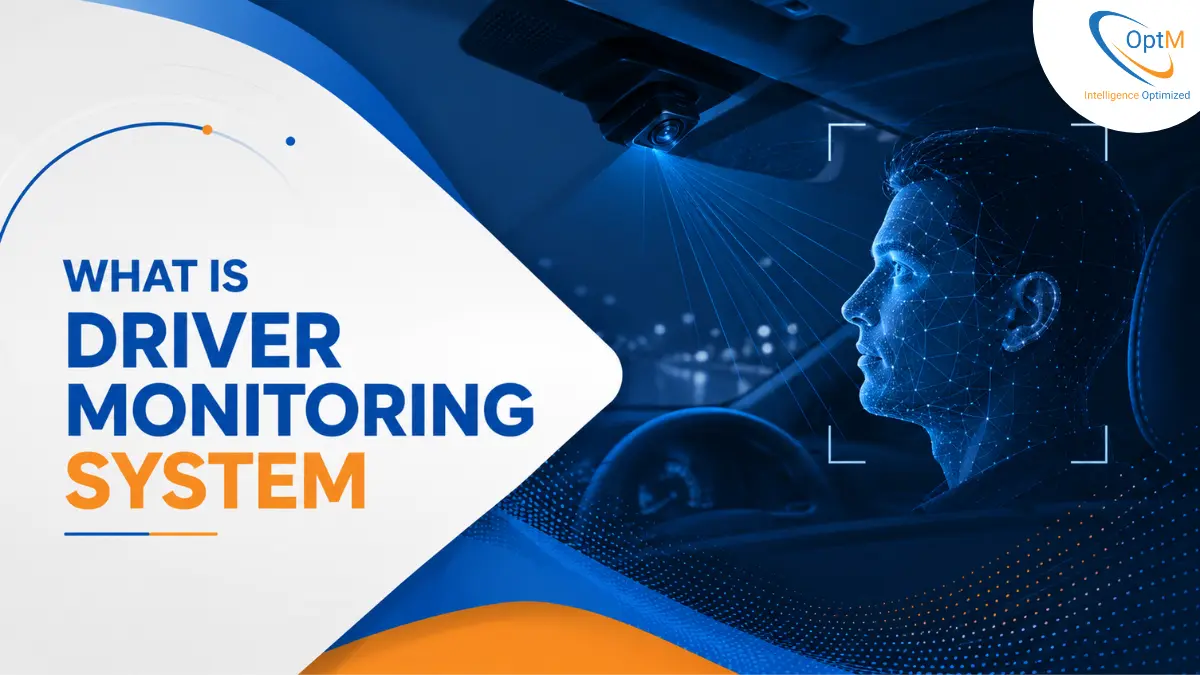
What is a Driver Monitoring System (DMS)?
A Driver Monitoring System (DMS) is an automotive safety technology that uses interior-facing cameras, artificial intelligence, and computer vision algorithms to monitor a driver's alertness, attention, and behavior in real time. The system analyzes indicators such as eye movements, blink patterns, gaze direction, and head position to identify fatigue, distraction, or impairment and provide timely alerts.
Unlike traditional vehicle safety systems that focus on monitoring the vehicle or surrounding environment, a DMS focuses on the most unpredictable element in transportation—the human driver.
Modern Driver Monitoring Systems typically perform:
- Driver attention monitoring
- Fatigue detection
- Distraction detection
- Eye tracking
- Head pose estimation
- Driver state assessment
- Real-time alert generation
As automotive manufacturers continue advancing toward higher levels of driving automation, understanding the driver's condition has become increasingly important.
Why Driver Monitoring Systems Have Become Essential
Driver Monitoring Systems help bridge the gap between human behavior and vehicle safety technology by continuously evaluating whether a driver is capable of safely operating a vehicle.
Even the most advanced vehicle cannot prevent every accident if the driver is fatigued, distracted, or unresponsive.
Several industry trends are accelerating DMS adoption:
Increasing Driver Distraction
Modern drivers face more distractions than ever before:
- Mobile devices
- Navigation systems
- Infotainment systems
- In-vehicle notifications
- Cognitive overload
Long-Haul Transportation Challenges
Commercial vehicle operators often drive for extended periods, increasing the likelihood of:
- Fatigue
- Reduced reaction times
- Attention lapses
- Microsleep events
Growth of ADAS Technologies
As ADAS features become more sophisticated, vehicles increasingly need confirmation that drivers remain engaged and capable of taking control when necessary.
Regulatory Momentum
Organizations such as the Euro NCAP and European safety regulators have placed growing emphasis on driver monitoring capabilities as part of future vehicle safety evaluations.
How Does a Driver Monitoring System Work?
A Driver Monitoring System continuously captures and analyzes driver behavioral data using cameras and AI algorithms. By evaluating facial landmarks, eye movements, gaze direction, blink frequency, and head posture, the system determines driver attentiveness and triggers alerts when unsafe behavior is detected.
At a high level, the workflow consists of seven stages:
1. Image Acquisition
An in-cabin camera continuously captures images or video of the driver.
2. Facial Detection
Computer vision algorithms identify the driver's face and establish tracking points.
3. Landmark Mapping
The system detects critical facial landmarks around:
- Eyes
- Eyelids
- Nose
- Mouth
- Jawline
4. Eye Tracking
The system evaluates:
- Eye openness
- Blink frequency
- Eye closure duration
- Gaze direction
5. Head Pose Estimation
The driver's head orientation is analyzed to determine whether attention remains focused on the road.
6. Driver State Assessment
AI models process multiple behavioral indicators simultaneously to determine attentiveness.
7. Alert Generation
If risk thresholds are exceeded, alerts may include:
- Audible warnings
- Visual notifications
- Haptic feedback
While this overview explains the core workflow Driver Monitoring System Working, modern DMS implementations involve significantly more advanced AI models, behavioral analytics, and decision logic.
Components of a Driver Monitoring System
A Driver Monitoring System combines sensing hardware, AI processing capabilities, vehicle communication interfaces, and alert mechanisms to deliver real-time driver state assessment.
In-Cabin Camera
The camera acts as the primary sensing component.
Modern systems often utilize:
- Infrared cameras
- Near-infrared illumination
- Low-light imaging
This enables operation during:
- Daytime driving
- Night driving
- Tunnel environments
AI Processing Engine
The processing engine executes:
- Computer vision algorithms
- Machine learning models
- Behavioral analytics
Driver State Assessment Module
This module evaluates:
- Fatigue levels
- Distraction events
- Driver engagement
Alert Management System
When unsafe behavior is detected, alerts are delivered through:
- Audio prompts
- Dashboard notifications
- Seat vibration systems
Vehicle Integration Layer
Automotive-grade DMS platforms often integrate with:
- ECU architectures
- CAN networks
- J1939 communication systems
- ADAS functions
- Telematics platforms
Each components of driver monitoring system contributes to system performance, accuracy, and reliability.
How Driver Monitoring Systems Detect Drowsiness and Distraction
Driver Monitoring Systems identify fatigue and distraction by analyzing multiple behavioral indicators simultaneously rather than relying on a single measurement.
One common misconception is that DMS only checks whether a driver's eyes are closed.
In reality, modern systems evaluate a combination of signals.
Drowsiness Indicators
These may include:
- Prolonged eye closure
- Increased blink duration
- Reduced blink consistency
- Head nodding
- Yawning frequency
- Reduced gaze stability
Distraction Indicators
Distraction detection often includes:
- Looking away from the road
- Mobile phone usage
- Excessive mirror checking
- Prolonged side glances
- Driver inattention events
AI-Based Behavioral Analysis
Modern systems leverage machine learning models to recognize patterns associated with unsafe behavior.
Instead of reacting to a single event, AI evaluates trends and contextual behavior over time.
Detecting fatigue is far more sophisticated than simply measuring eye closure. Learn more about the technologies and methodologies involved in How Driver Monitoring Systems Detect Drowsiness and Distraction.
Key Benefits of Driver Monitoring Systems
Driver Monitoring Systems improve safety by proactively identifying risky driver behavior before it develops into a critical event.
Improved Road Safety
The most obvious benefit is accident prevention.
Early intervention can reduce:
- Fatigue-related incidents
- Distraction-related collisions
- Human error events
Enhanced Driver Awareness
Drivers often become aware of their own fatigue only after performance has already declined.
DMS provides timely feedback before that point.
Better Fleet Safety
For fleet operators, DMS can help:
Reduce safety incidents
Improve driver accountability
Support risk management programs
Stronger ADAS Performance
Advanced Driver Assistance Systems are most effective when drivers remain engaged.
DMS ensures that human supervision remains active when required.
Future Regulatory Readiness
As safety regulations continue evolving, DMS adoption may help organizations align with future compliance expectations.
The Benefits Of Driver Monitoring System extend beyond accident prevention and increasingly influence operational efficiency, insurance considerations, and advanced safety deployments.
Driver Monitoring Systems in Modern Automotive Safety Ecosystems
Modern Driver Monitoring Systems operate as part of a broader automotive safety ecosystem that includes ADAS, telematics, connected vehicle technologies, embedded software platforms, and intelligent cockpit architectures.
Today's vehicles increasingly function as connected computing platforms rather than purely mechanical systems.
Within this ecosystem, DMS interacts with technologies such as:
- Advanced Driver Assistance Systems (ADAS)
- Electronic Control Units (ECUs)
- Telematics Control Units (TCUs)
- Human Machine Interfaces (HMIs)
- Connected vehicle platforms
- Intelligent cockpit systems
From an automotive engineering perspective, DMS provides the human-awareness layer that many other vehicle technologies depend upon.
As vehicles move closer toward autonomous capabilities, understanding driver readiness becomes increasingly important for safe transitions between automated and manual driving modes.
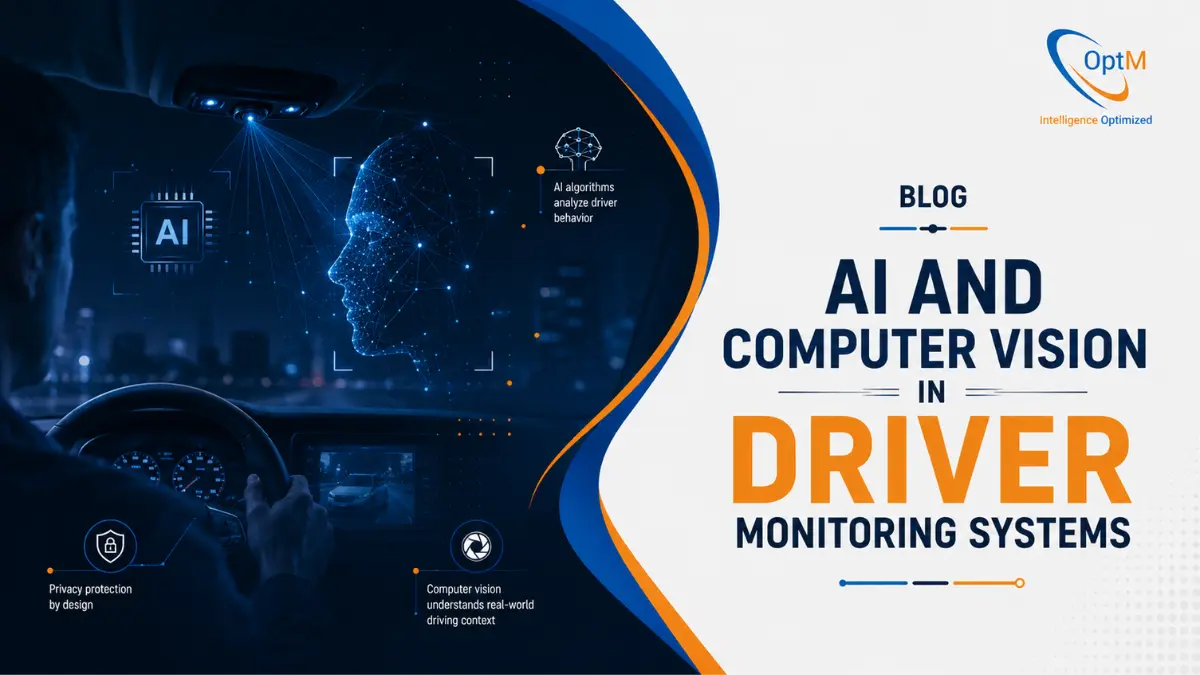
AI and Computer Vision in Driver Monitoring Systems
Artificial intelligence and computer vision enable Driver Monitoring Systems to interpret driver behavior in real time rather than simply recording video data.
Several technologies make modern DMS possible.
Facial Landmark Detection
AI identifies specific facial reference points for continuous tracking.
Eye Tracking
Computer vision algorithms monitor:
- Eye position
- Blink behavior
- Gaze direction
Head Pose Estimation
The system determines whether the driver's attention remains directed toward the roadway.
Behavioral Analytics
AI models evaluate behavioral patterns rather than isolated events.
Edge AI Processing
Many modern systems process data locally within the vehicle, enabling:
- Faster response times
- Lower latency
- Improved privacy
- Reduced cloud dependency
Technologies such as gaze estimation, facial landmark tracking, and edge AI continue transforming intelligent in-cabin monitoring. Learn more in our guide on AI and Computer Vision in Driver Monitoring Systems.
Driver Monitoring System Architecture Explained
A Driver Monitoring System architecture typically consists of sensing, processing, decision-making, and vehicle integration layers working together to deliver continuous driver state assessment.
Sensing Layer
Responsible for data acquisition:
- Cameras
- Infrared illumination
- Environmental sensing
Processing Layer
Responsible for:
- Image processing
- Computer vision
- AI inference
Decision Layer
Performs:
- Driver state evaluation
- Risk assessment
- Event classification
Vehicle Integration Layer
Interfaces with:
- ECUs
- CAN communication
- J1939 networks
- ADAS systems
- Safety modules
DMS vs ADAS: What's the Difference?
Driver Monitoring Systems monitor the driver, while Advanced Driver Assistance Systems monitor the vehicle and surrounding environment.
Although the two technologies are closely related, they serve different purposes.
| Driver Monitoring System (DMS) | Advanced Driver Assistance Systems (ADAS) |
|---|---|
| Monitors driver behavior | Monitors external environment |
| Detects fatigue | Detects hazards |
| Tracks attention | Supports driving tasks |
| In-cabin focus | Road-focused sensors |
In practice, DMS and ADAS work best together.
ADAS may identify hazards, while DMS verifies that the driver remains capable of responding appropriately.
Driver Monitoring System Applications
Driver Monitoring Systems are now being deployed across a wide range of transportation environments.
Passenger Vehicles
Improving safety and supporting ADAS functions.
Commercial Fleets
Helping reduce fatigue-related incidents among professional drivers.
Public Transportation
Supporting driver attentiveness in buses and transit operations.
Logistics Operations
Enhancing operational safety across long-distance transportation routes.
Electric Vehicles
Contributing to intelligent cockpit and software-defined vehicle ecosystems.
In real-world mobility deployments, DMS increasingly works alongside telematics, connected vehicle platforms, and embedded intelligence solutions to create safer transportation environments.
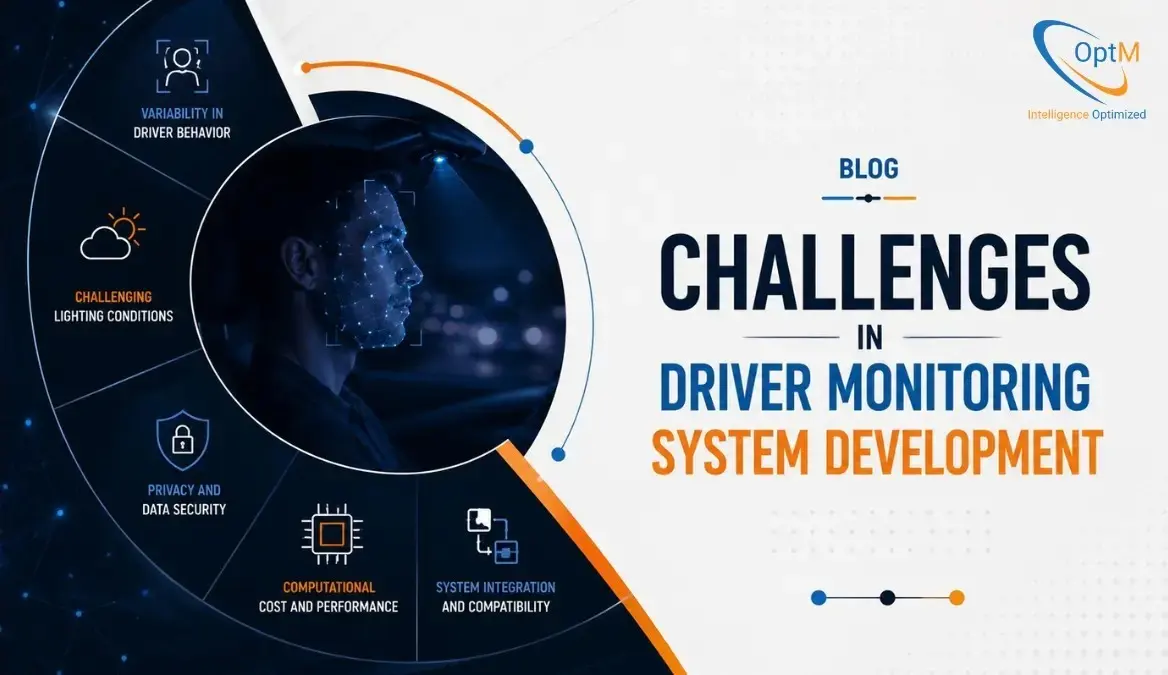
Challenges in Driver Monitoring System Development
Developing automotive-grade Driver Monitoring Systems requires balancing accuracy, performance, reliability, privacy, and real-world environmental conditions.
Key challenges include:
- Low-light conditions
- Sunglasses and occlusions
- Driver diversity
- False positives
- Processing latency
- Privacy considerations
- Vehicle integration complexity
Engineering teams must optimize detection performance without compromising user experience.
For a deeper analysis, see our guide on Challenges in Driver Monitoring System Development.
Driver Monitoring System Testing and Validation
Driver Monitoring Systems require extensive testing and validation to ensure consistent performance across real-world operating conditions.
Validation typically includes:
- Fatigue detection accuracy testing
- Driver distraction testing
- Environmental robustness testing
- Low-light performance evaluation
- Vehicle integration validation
- Real-world field testing
Because DMS directly influences vehicle safety, testing must extend beyond laboratory conditions and include diverse driver populations and operating scenarios.
How to Choose the Right Driver Monitoring System
When evaluating driver monitoring system solutions, organizations should consider:
Detection Accuracy
Can the system reliably identify fatigue and distraction?
AI Capability
Does it leverage advanced computer vision and behavioral analytics?
Vehicle Integration
Can it integrate with existing vehicle architectures?
Scalability
Can it support future ADAS and connected mobility initiatives?
Deployment Requirements
Is it suitable for passenger vehicles, fleets, or commercial transportation?
Selecting the right solution requires balancing safety objectives, operational requirements, and long-term technology roadmaps.
FAQs
What is the main purpose of a Driver Monitoring System?
The primary purpose of a Driver Monitoring System is to monitor driver attentiveness and identify signs of fatigue, distraction, or unsafe behavior before they lead to accidents.
How does a Driver Monitoring System detect fatigue?
DMS solutions analyze indicators such as eye closure duration, blink patterns, gaze behavior, head posture, and behavioral trends using AI and computer vision algorithms.
Is Driver Monitoring System part of ADAS?
While DMS and ADAS are separate technologies, they frequently work together. ADAS monitors the environment, while DMS monitors the driver.
Can Driver Monitoring Systems work at night?
Yes. Many modern systems use infrared cameras and near-infrared illumination to operate effectively in low-light and nighttime conditions.
What technologies are used in DMS?
Common technologies include: - Computer vision - Artificial intelligence - Machine learning - Eye tracking - Facial landmark detection - Edge processing
Common technologies include:
- Computer vision
- Artificial intelligence
- Machine learning
- Eye tracking
- Facial landmark detection
- Edge processing
Are Driver Monitoring Systems only used in commercial vehicles?
No. DMS is increasingly being adopted across passenger vehicles, electric vehicles, public transportation systems, and commercial fleets.
Looking for an Automotive-Grade Driver Monitoring Solution?
As Driver Monitoring Systems become increasingly important within connected vehicles, fleet operations, and intelligent mobility ecosystems, organizations need solutions that combine AI-powered monitoring, real-time processing, and reliable vehicle integration.
OptM's Driver Monitoring System is designed to support safer transportation environments through intelligent driver behavior analysis, real-time alerts, and advanced monitoring capabilities.