
Content Writer & SEO Specialist
Content Writer & SEO Specialist
Aditya Sharma is a content writer at OptM Solutions specializing in automotive electronics, embedded systems, telematics, electric vehicle technologies, connected mobility, and autonomous driving technologies.
LinkedIn ProfileModern vehicles are expected to do more than just stop quickly--they must remain stable and controllable even during sudden braking. This is where the Anti Lock Braking System (ABS) plays a crucial role.
If you've already explored the fundamentals of ABS and how it prevents wheel lockup, the next logical step is understanding the individual components that make the system work. Each ABS component has a specific responsibility, from monitoring wheel movement to regulating brake pressure in real time.A cross-national study published through PubMed reported that motorcycle ABS reduced injury crashes by 24% to 34%, while severe and fatal crashes were reduced by as much as 42% in some regions.
Whether you're an automotive engineer, fleet operator, OEM decision-maker, or simply interested in vehicle safety technology, understanding the components of Anti Lock Braking System provides valuable insight into one of the most important safety systems found in modern vehicles.
What Are the Components of an Anti Lock Braking System?
The components of an Anti Lock Braking System are the electronic, sensing, and hydraulic elements responsible for detecting wheel lockup and regulating braking force. Together, these components continuously monitor wheel behavior and adjust brake pressure to maintain traction and steering control during hard braking.
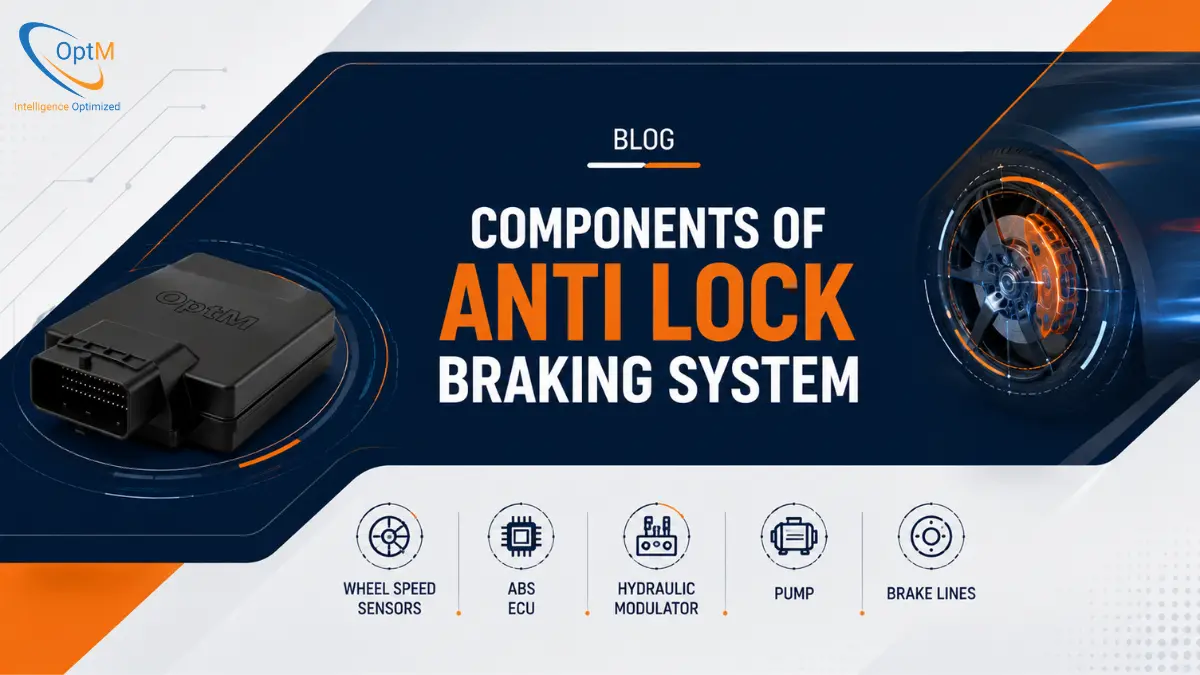
A typical ABS consists of:
| Component | Primary Function |
|---|---|
| Wheel Speed Sensors | Monitor wheel rotation speed |
| ABS Control Unit (ECU) | Processes sensor data and makes decisions |
| Hydraulic Modulator | Controls brake fluid pressure |
| Solenoid Valves | Regulate hydraulic flow |
| ABS Pump | Restores released brake pressure |
| Brake Actuators | Apply braking force |
| ABS Warning System | Indicates faults and diagnostics |
Let's examine each component in detail.
Wheel Speed Sensors
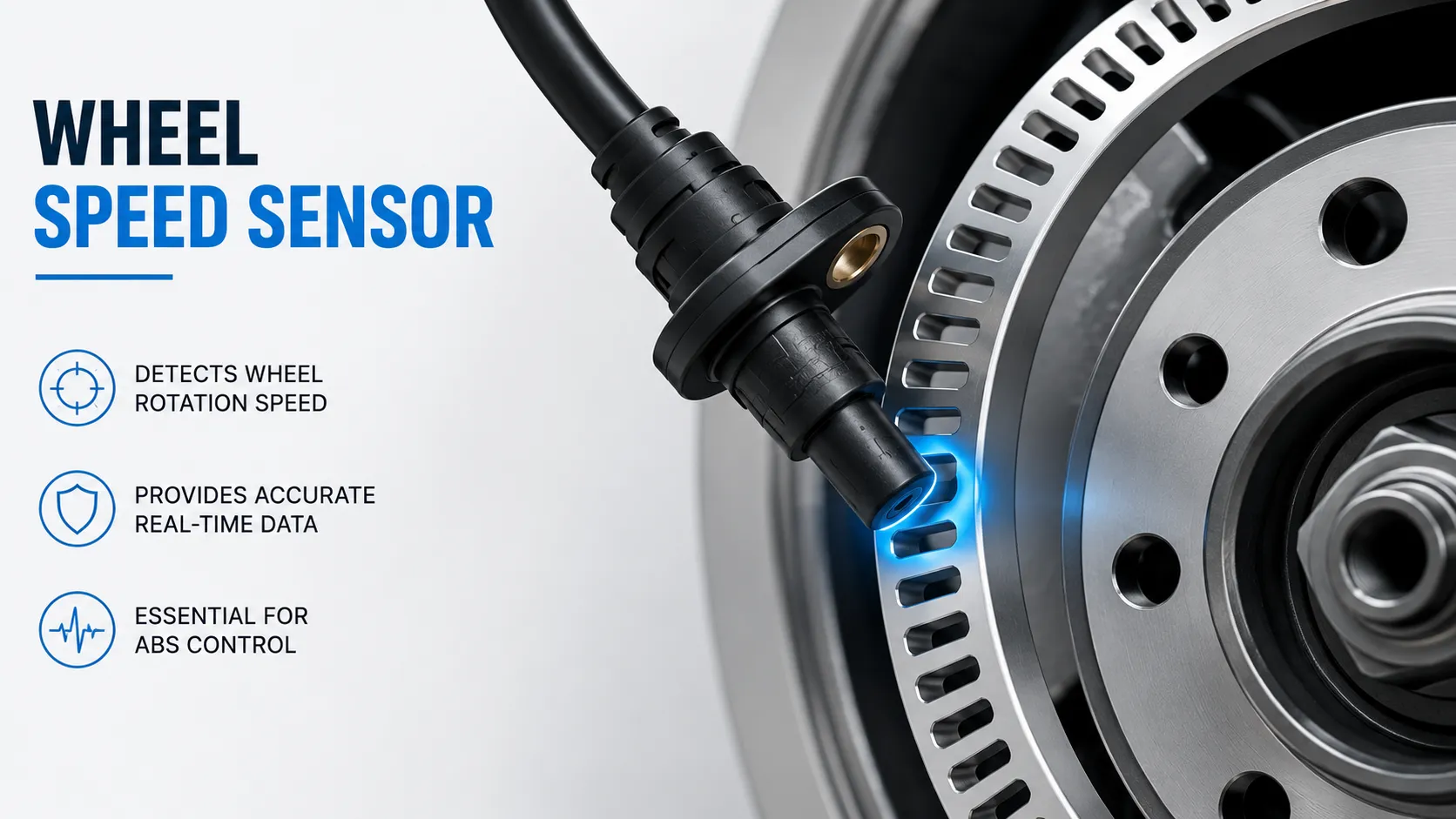
A wheel speed sensor continuously measures how fast each wheel is rotating and sends that information to the ABS control unit.
These sensors are positioned near the wheel hubs and generate real-time wheel speed data. During braking, the ABS system compares the rotational speed of all wheels. If one wheel begins slowing down significantly faster than the others, the system interprets it as a potential wheel lockup condition.
Why Wheel Speed Sensors Are Important
- Detect wheel slip before lockup occurs
- Provide real-time data to the ABS controller
- Help maintain traction during braking
- Improve overall braking response
In safety-critical automotive environments, the accuracy of wheel speed sensors directly impacts the effectiveness of the entire braking system. Even a minor sensor fault can affect ABS performance and trigger warning indicators.
ABS Control Unit (ECU)
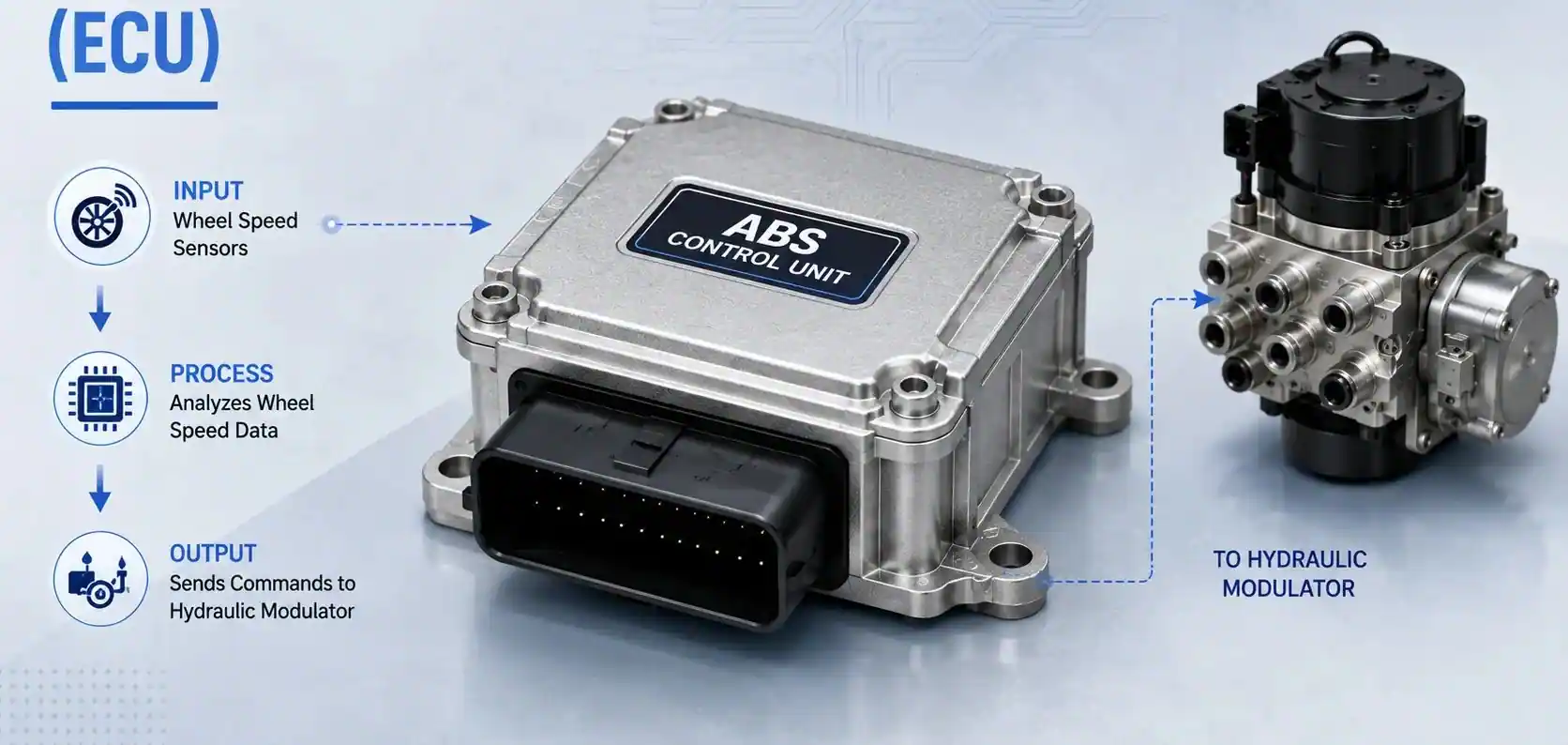
The ABS Control Unit , often called the ABS ECU, is the brain of the Anti Lock Braking System. It receives wheel speed information, analyzes vehicle behavior, and determines whether brake pressure adjustments are required.
The ECU performs thousands of calculations every second. When it identifies a wheel approaching lockup, it immediately sends commands to the hydraulic modulator to regulate braking pressure.
Key Functions of the ABS Control Unit
- Processes wheel speed sensor inputs
- Detects wheel lockup conditions
- Executes real-time braking decisions
- Controls hydraulic pressure adjustments
- Monitors overall ABS health and diagnostics
In production-grade automotive systems, ABS ECUs are designed for millisecond-level response times to ensure braking interventions occur before steering control is lost.
Many modern braking architectures also integrate closely with vehicle dynamics systems, which is why ABS controllers often share communication networks with stability control and traction control systems.
Hydraulic Modulator Unit
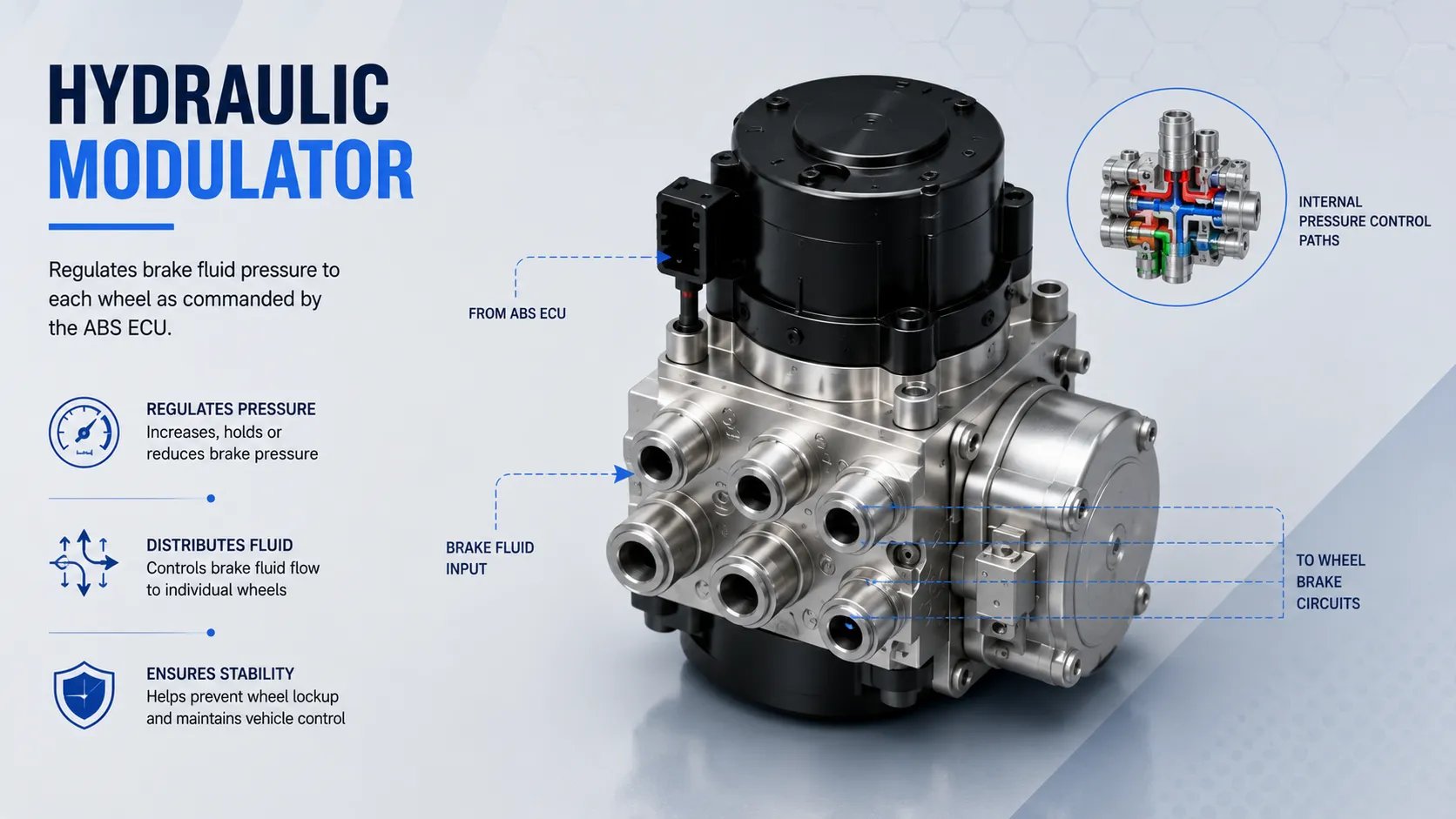
The hydraulic modulator is responsible for controlling brake fluid pressure delivered to individual wheels.
When the ABS ECU determines that brake pressure must be adjusted, it sends instructions to the hydraulic modulator. The modulator then increases, decreases, or maintains pressure as needed.
What Does the Hydraulic Modulator Do?
- Receives commands from the ABS ECU
- Controls hydraulic pressure to each wheel
- Prevents excessive braking force
- Maintains optimal traction
Without the hydraulic modulator, the ABS system would have no mechanism to physically alter braking force.
You can think of it as the execution layer that converts electronic decisions into real braking actions.
Solenoid Valves
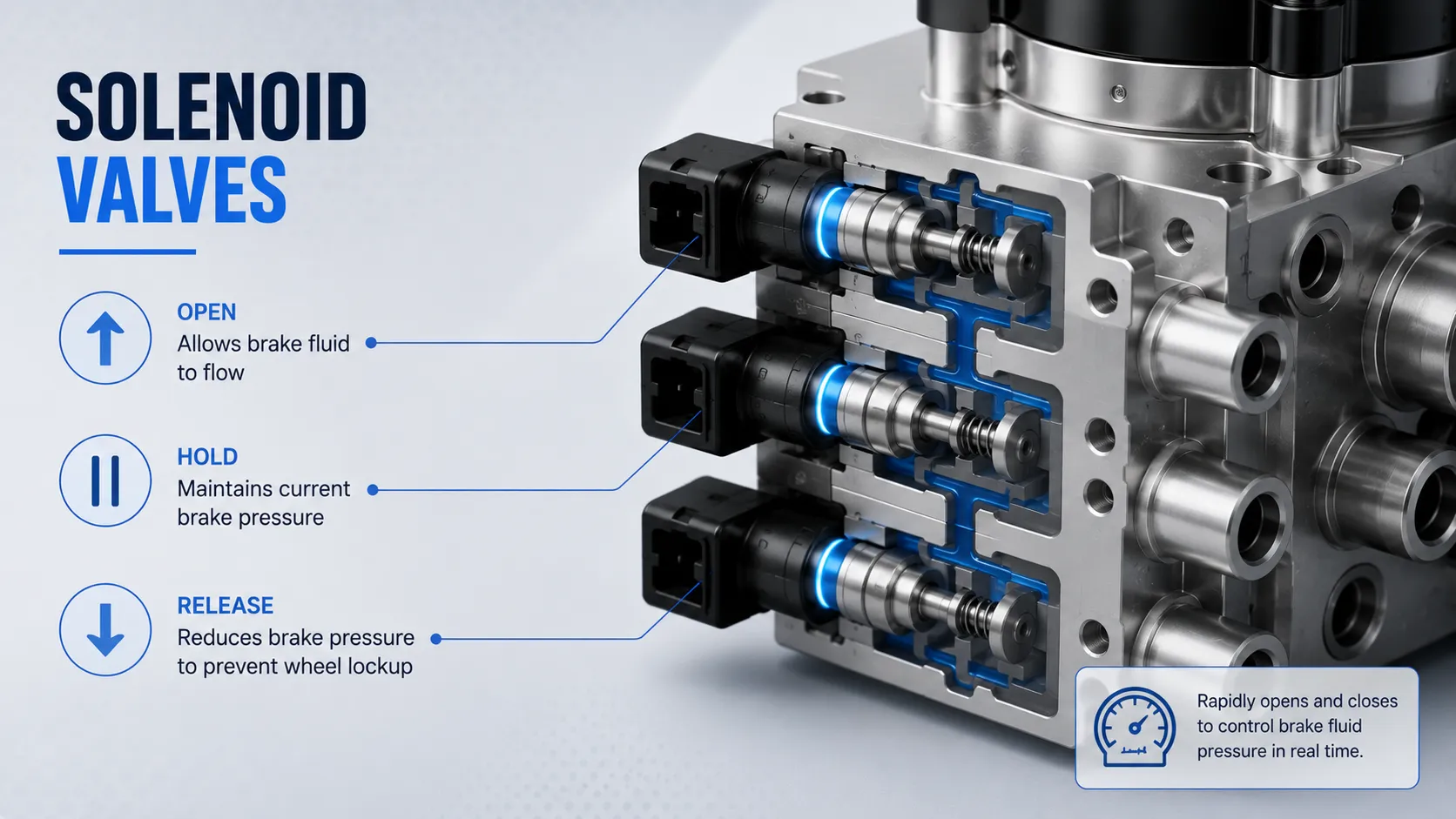
Inside the hydraulic modulator are multiple solenoid valves that control the movement of brake fluid.
These electronically controlled valves rapidly open and close to manage brake pressure. During an ABS event, they can cycle several times per second to maintain optimal wheel traction.
Three Pressure Control Modes
Pressure Increase
- Brake pressure rises normally.
Pressure Hold
- Pressure remains constant to prevent wheel lockup.
Pressure Release
- Excess pressure is reduced to restore wheel rotation.
This rapid pressure modulation is what creates the characteristic pulsation drivers often feel through the brake pedal when ABS activates.
ABS Pump
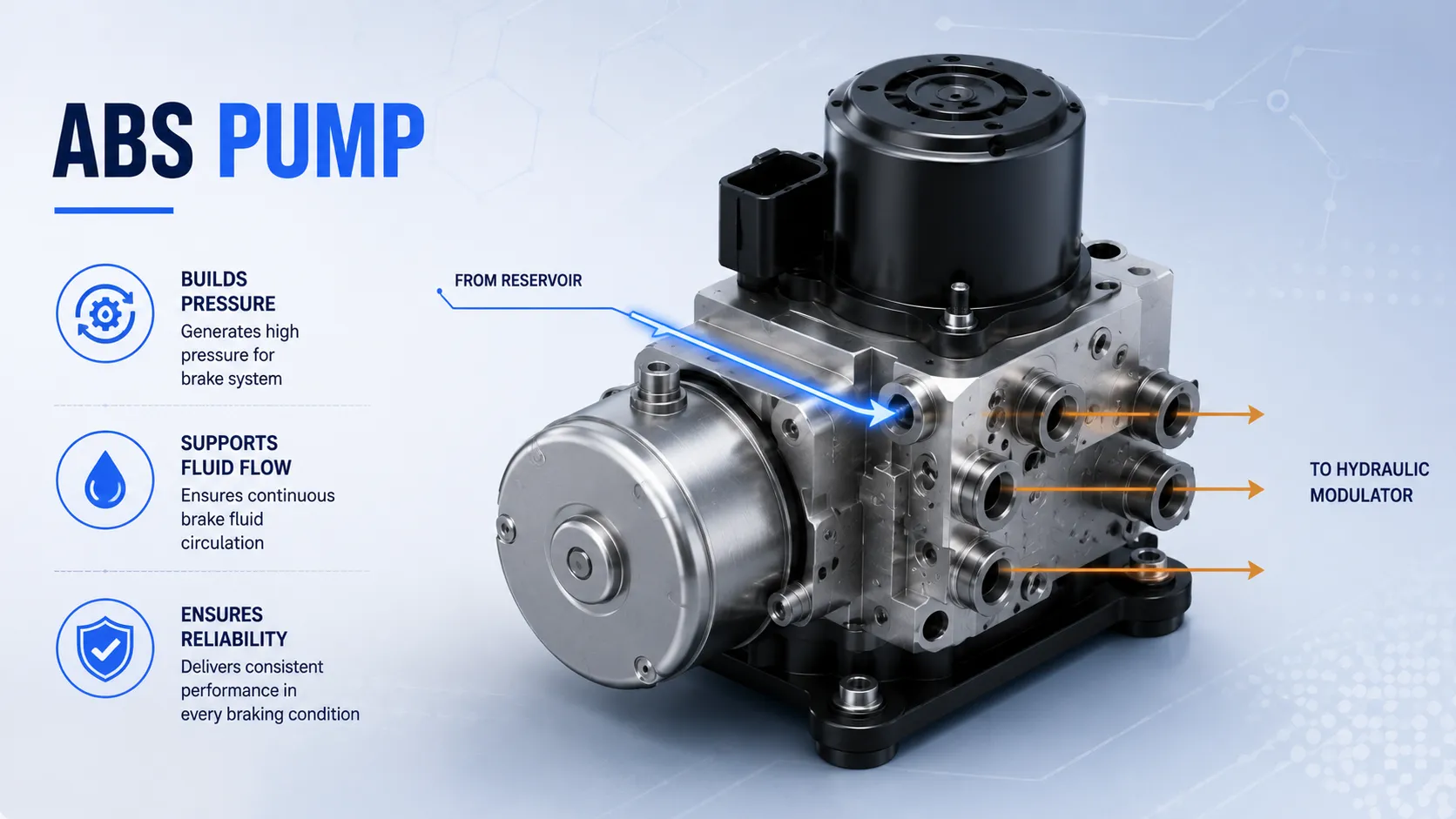
Whenever brake pressure is released during ABS intervention, the system must restore that pressure to maintain braking effectiveness.
This task is performed by the ABS pump.
The pump works alongside the hydraulic modulator and solenoid valves to ensure sufficient braking force remains available throughout the braking event.
Functions of the ABS Pump
- Restores released hydraulic pressure
- Supports continuous braking performance
- Enables repeated ABS cycles
- Maintains system responsiveness
Without the pump, brake pressure reductions would compromise overall stopping performance.
Brake Actuators and Brake Assemblies
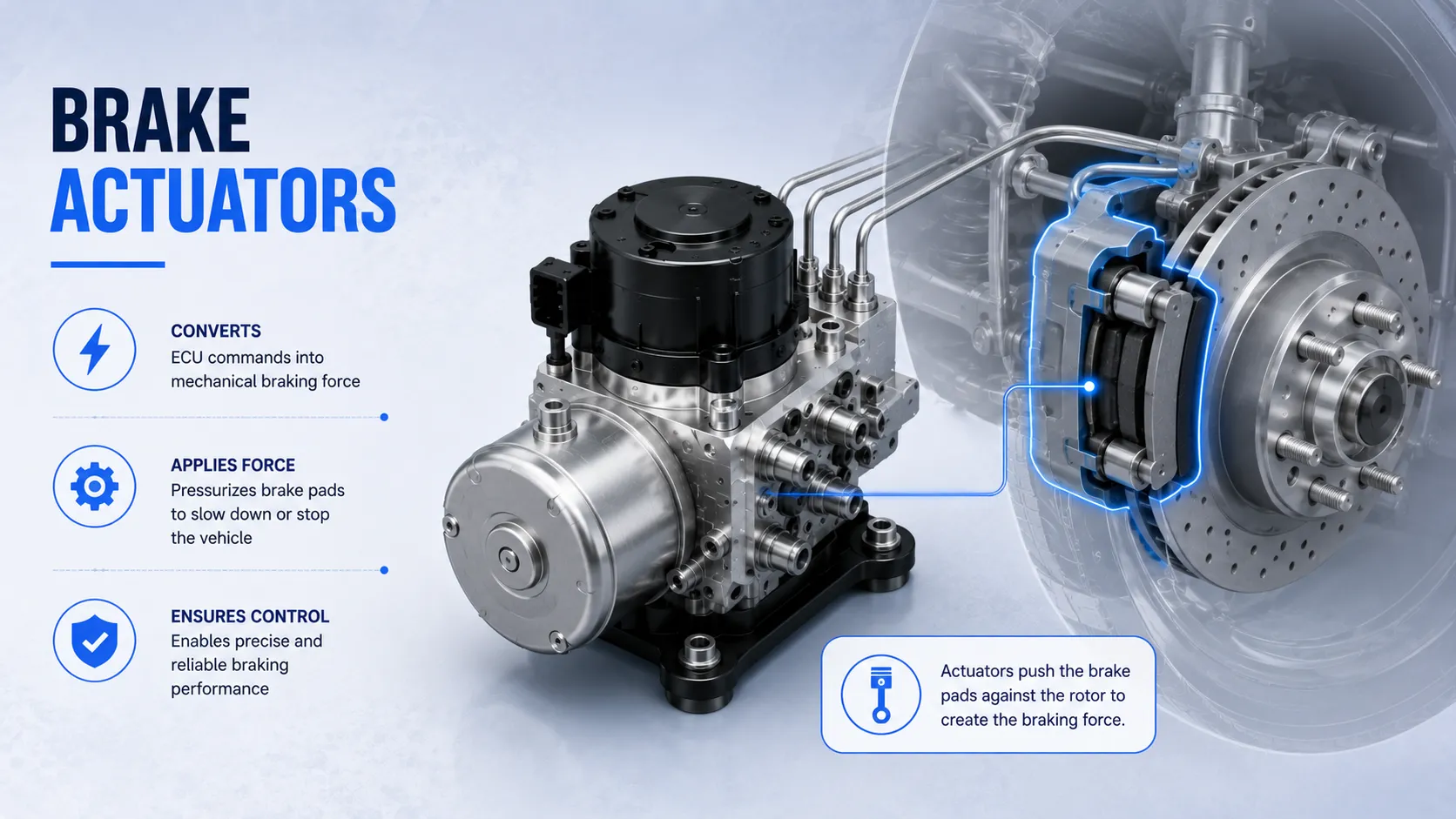
While brake actuators are part of the broader braking system rather than the ABS itself, they play a critical role in executing ABS commands.
Brake actuators convert hydraulic pressure into mechanical braking force at the wheels.
Depending on vehicle design, these assemblies may include:
- Disc brake calipers
- Brake pads
- Brake rotors
- Drum brake components
- Wheel cylinders
The ABS system regulates pressure, but the actual braking force is ultimately applied through these mechanical components.
ABS Warning Light and Diagnostic System
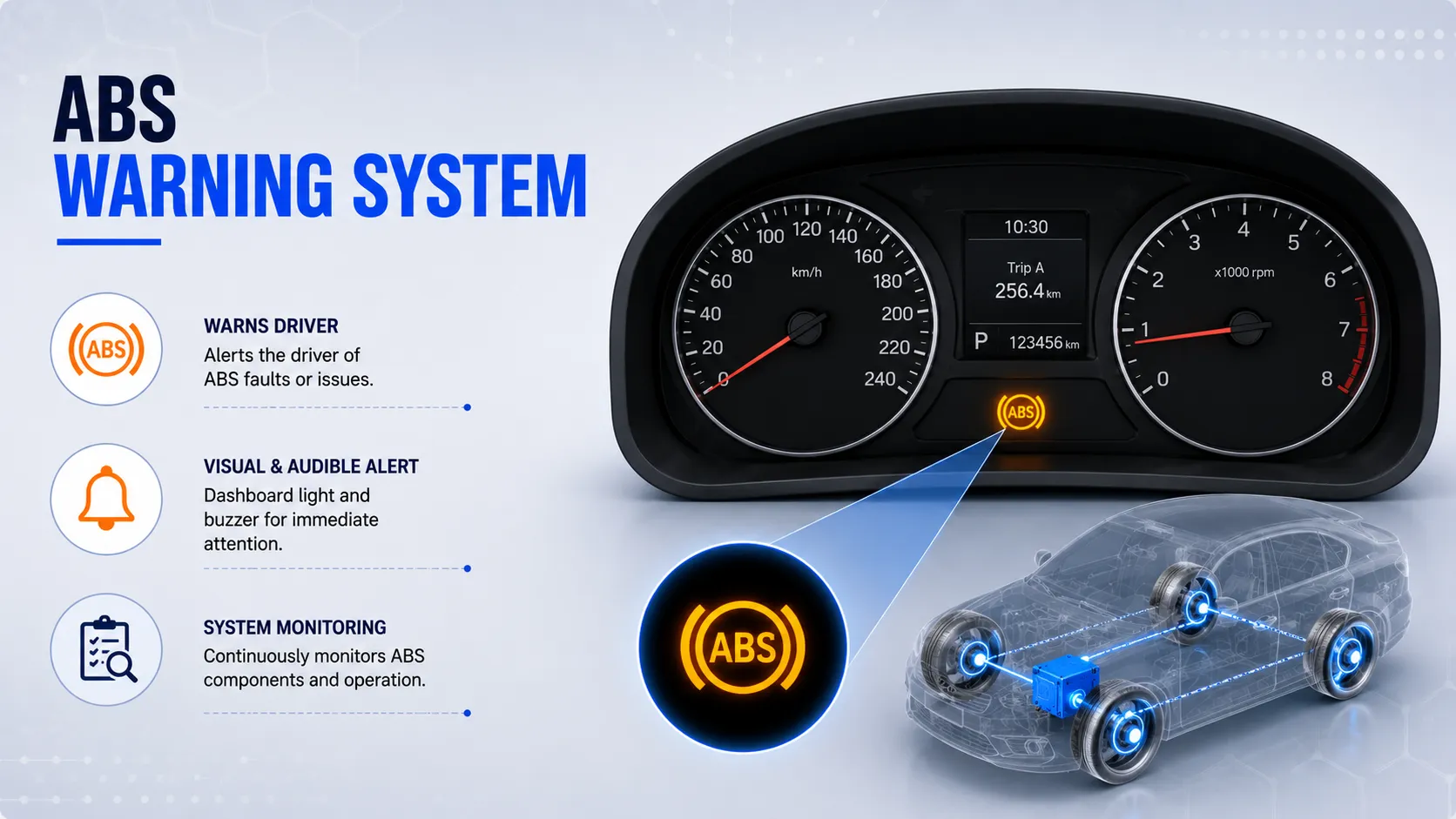
Modern ABS systems continuously perform self-diagnostics to ensure all components are functioning correctly.
When the system detects a fault, the ABS warning light illuminates on the dashboard.
Common Causes of ABS Warning Lights
- Wheel speed sensor failures
- Damaged wiring
- Hydraulic modulator faults
- ECU communication issues
- Pump malfunctions
Although normal braking typically remains available, ABS functionality may be disabled until repairs are completed.
This diagnostic capability allows maintenance teams to identify issues before they impact vehicle safety.
How All ABS Components Work Together
The true effectiveness of ABS comes from how its components operate as a coordinated system.
ABS Workflow
- Driver applies the brakes.
- Wheel speed sensors monitor wheel rotation.
- ABS ECU analyzes wheel speed data.
- ECU detects potential wheel lockup.
- Hydraulic modulator receives control commands.
- Solenoid valves adjust brake pressure.
- ABS pump restores pressure when required.
- Wheel traction is maintained.
- Vehicle remains stable and steerable.
This cycle can occur multiple times per second during emergency braking.
The result is improved vehicle control, reduced skidding risk, and enhanced braking stability on challenging road surfaces. The exact pressure regulation process becomes easier to understand when examining how ABS works during real-world braking scenarios , especially on wet, slippery, or uneven road surfaces.A long-term study published by the National Highway Traffic Safety Administration found that ABS reduced overall nonfatal crash involvement rates by approximately 6% in passenger cars and 8% in light trucks and vans, highlighting the real-world safety impact of advanced braking control systems.
Why ABS Components Matter for Vehicle Safety
Every component of Anti Lock Braking System contributes to vehicle safety. If even one element fails, the system's ability to prevent wheel lockup may be compromised.
From OEM and fleet management perspectives, ABS delivers several important benefits :
- Improved vehicle stability
- Better steering control during braking
- Reduced risk of skidding
- Enhanced driver confidence
- Improved safety in wet and slippery conditions
These advantages explain why ABS has become a foundational technology for modern passenger vehicles, commercial fleets, and electric mobility platforms.
Choosing the Right ABS Module for Modern Vehicles
While understanding ABS components is important, real-world implementation depends on selecting an ABS module capable of delivering reliable performance under varying operating conditions.
Engineering teams typically evaluate factors such as:
- Automotive-grade ECU architecture
- Sensor compatibility
- Real-time response capability
- CAN communication support
- Vehicle platform integration
- Long-term reliability requirements
For OEMs and mobility solution providers, the ABS module is not simply a braking component--it is a safety-critical control system that must function consistently throughout the vehicle's lifecycle. From an embedded automotive engineering perspective, companies like OptM Solutions focus on developing automotive-grade ABS Solutions that align with modern connected mobility, EV, and intelligent vehicle safety ecosystems.
As braking systems continue evolving alongside con nected mobility and software-defined vehicle architectures , ABS modules are increasingly becoming part of broader vehicle safety ecosystems.
Frequently Asked Questions (FAQs)
What are the main components of an Anti Lock Braking System?
The primary ABS components include wheel speed sensors, an ABS control unit (ECU), a hydraulic modulator, solenoid valves, an ABS pump, brake actuators, and diagnostic systems.
Which component acts as the brain of ABS?
The ABS Control Unit (ECU) serves as the brain of the system. It processes wheel speed data and determines when brake pressure adjustments are required.
What happens if a wheel speed sensor fails?
A failed wheel speed sensor can prevent the ABS system from accurately detecting wheel lockup. This often triggers the ABS warning light and may disable ABS functionality.
How many wheel speed sensors does ABS use?
The number of sensors depends on the ABS configuration. Modern four-channel ABS systems typically use one sensor per wheel, while older systems may use fewer sensors.
Can ABS work without a hydraulic modulator?
No. The hydraulic modulator is essential because it physically controls brake pressure adjustments. Without it, the ABS system cannot regulate braking force.
Conclusion
The components of an Anti Lock Braking System work together to create one of the most important safety technologies in modern vehicles. From wheel speed sensors and ABS ECUs to hydraulic modulators and pumps, each component plays a critical role in preventing wheel lockup and maintaining vehicle stability.
Understanding how these components interact, provides valuable insight into modern braking architecture and helps automotive professionals evaluate safety performance more effectively.
If you're exploring modern ABS implementations for passenger vehicles, commercial fleets, or EV platforms, see how OptM's ABS Module combines intelligent control, sensor integration, and real-time braking response in a production-ready solution.