Aditya Sharma
OptM Solutions
Aditya Sharma
OptM Solutions
Aditya is a B2B Content Writer and SEO Specialist with extensive experience in the automotive and embedded technology industry. He specializes in creating research-driven, technically accurate, and search-optimized content focused on automotive electronics and components , EV solutions, and next-generation mobility technologies
LinkedIn ProfileA Driver Monitoring System (DMS) is no longer a “nice-to-have” feature in modern vehicles—it’s becoming a core safety and intelligence layer inside the cabin.
According to the World Health Organization, road traffic injuries cause over 1.19 million deaths globally each year, highlighting the critical need for technologies that can reduce driver-related risks.
In production-grade automotive environments, DMS plays a critical role in:
- preventing accidents caused by human error
- enabling advanced driver assistance systems (ADAS)
- supporting regulatory safety requirements
As vehicles become smarter, the focus is shifting from just monitoring the road to understanding the driver. This guide breaks down everything you need to know—from basic concepts to real-world implementation insights—so you don’t need to rely on multiple sources.
What is a Driver Monitoring System (DMS)?
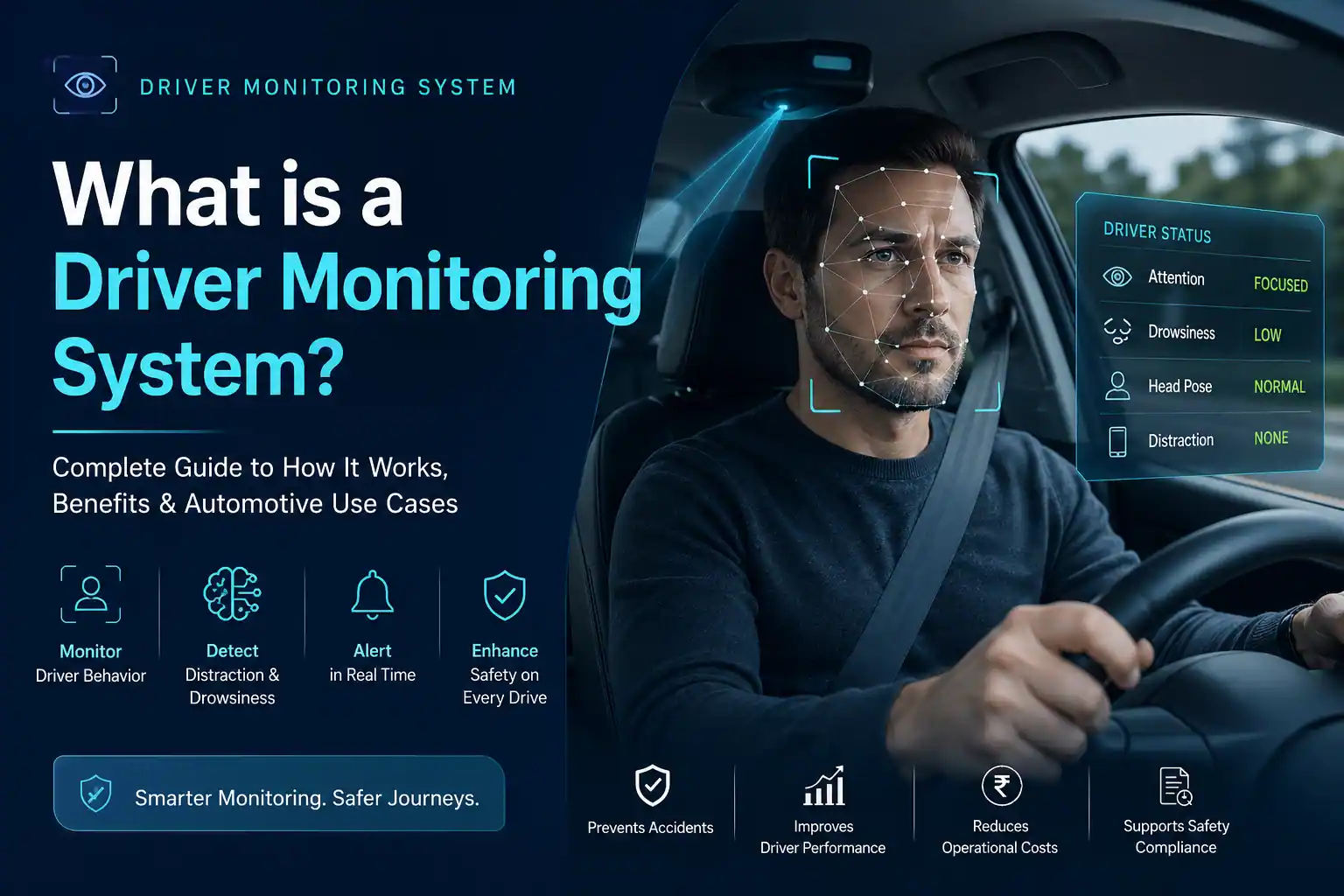
A Driver Monitoring System (DMS) is an in-vehicle technology that uses cameras, sensors, and AI algorithms to analyze a driver’s behavior, attention, and state in real time.
In simple terms, it ensures the driver is:
- attentive
- alert
- focused on driving
What problem does it solve? Human error contributes to a majority of road accidents. DMS addresses:
- driver fatigue
- distraction (mobile usage, looking away)
- microsleep incidents
Where is it used?
- Passenger vehicles
- Commercial vehicles
- Fleet management systems
- Electric vehicles (EVs)
What Does a Driver Monitoring System Do?
At a functional level, a DMS continuously evaluates driver behavior and triggers alerts when unsafe patterns are detected.
Core functions include:
- Drowsiness detection → identifies fatigue through eye closure and blink patterns
- Distraction detection → detects gaze deviation and head movement
- Eye tracking → monitors attention and focus
- Behavior analysis → identifies risky driving habits
Real-world scenario: If a driver looks away from the road for more than a few seconds, the system:
- Detects gaze deviation
- Confirms distraction pattern
- Triggers an alert (audio/visual/haptic)
How Does a Driver Monitoring System Work?
A Driver Monitoring System works by capturing driver data using in-cabin cameras, processing it through AI algorithms, and generating alerts if unsafe behavior like drowsiness or distraction is detected.
At a functional level, a DMS continuously evaluates driver behavior and triggers alerts when unsafe patterns are detected. To understand the complete technical flow behind this, you can explore a detailed breakdown of how a driver monitoring system actually works in real-world automotive environments.
Step-by-Step Workflow
- Data Capture
- IR or RGB camera monitors the driver’s face
- Feature Extraction
- Eye movement
- head position
- facial landmarks
- AI Processing
- Computer vision models analyze patterns
- detects fatigue, distraction, or abnormal behavior
- Decision Engine
- evaluates risk level
- Alert System
- triggers warnings (sound, vibration, dashboard alerts)
Key Technologies Behind DMS
- Computer Vision (CV)
- Artificial Intelligence / Machine Learning
- Infrared (IR) Cameras (low-light capability)
- Edge Processing (real-time response)
Driver Monitoring System Architecture (Real Automotive View)
Most blogs stop at “how it works.” But in real automotive systems, the architecture is where things get interesting. In production environments, a DMS is not standalone—it is part of a larger in-cabin intelligence ecosystem.
Core Components:
- In-Cabin Camera Module
- Positioned on dashboard or steering column
- captures facial data continuously
- Processing Unit (ECU / Embedded System)
- runs AI models locally (edge processing)
- ensures low latency decision-making
- Data Communication Layer
- communicates via CAN / vehicle network
- shares insights with other vehicle systems
- Integration Layer
- DMS connects with ADAS systems, infotainment displays, and telematics systems
Why this matters (real insight): From an OEM integration perspective, the challenge is not detection—it’s:
- latency
- accuracy
- system interoperability
This is where production-grade solutions differ from basic implementations.
Benefits of Driver Monitoring Systems
Driver Monitoring Systems help reduce accidents, lower operational costs, and improve driver accountability by continuously analyzing driver behavior and alerting in real time.
While these benefits give a high-level view, it’s important to understand the real-world impact and measurable outcomes in detail. Here’s a deeper look at the key benefits of driver monitoring systems in modern vehicles and fleets.
This leads to several key benefits:
1. Helps prevent accidents before they happen
A DMS continuously watches the driver’s eyes, face, and head movement. If it detects early signs of fatigue or distraction, it immediately alerts the driver. This means the system doesn’t wait for a mistake — it acts before a dangerous situation develops.
2. Reduces real business costs for fleets
For fleet operators, accidents are expensive—vehicle downtime, repair costs, insurance claims. By reducing risky driving behavior, DMS helps lower these costs over time. So the benefit is not just “safety” — it’s better operational control and cost reduction.
3. Gives actual data on driver behavior
DMS doesn’t just give alerts—it records patterns like how often drivers get distracted. This data can be used to identify high-risk drivers and improve training programs. Instead of guessing, companies get real data to improve driver performance.
4. Makes ADAS systems safer to use
In vehicles with features like lane assist or adaptive cruise control, drivers may become less attentive. DMS ensures the driver is still paying attention while these systems are active.
This prevents over-reliance on automation, which is a major real-world safety issue.
As highlighted by the National Highway Traffic Safety Administration, driver assistance systems are not autonomous and still require active driver supervision, reinforcing the importance of continuous driver monitoring.
5. Helps meet safety regulations
New safety standards are starting to require driver attention monitoring. DMS helps manufacturers meet these requirements.
Driver Monitoring System Functions & Features
1. Eye tracking (how the system checks attention)
The system tracks where the driver's eyes are looking and how often they blink.
2. Head movement detection
The system monitors the position and angle of the driver’s head. (e.g. head turned sideways = likely distraction).
3. Fatigue detection (how it identifies drowsiness)
The system combines multiple signals like slow blinking, eyes staying closed longer than normal, and slight head nodding.
4. Distraction detection
The system checks if the driver is looking away from the road, using a mobile phone, or not facing forward.
5. Alert system (how it responds)
When unsafe behavior is detected, the system warns the driver using sound alerts, visual warnings on screen, or vibrations.
6. Real-time processing (why it works instantly)
All of this happens inside the vehicle using built-in hardware, ensuring fast response without internet connection.
7. Integration with vehicle systems
DMS works together with other systems in the vehicle, such as ADAS, dashboard displays, and telematics systems.
Driver Monitoring System Requirements
- Hardware Requirements: high-resolution camera, IR capability for night driving
- Software Requirements: AI models trained on diverse datasets, real-time processing capability
- Integration Requirements: compatibility with vehicle ECU, CAN / communication protocol support
- Environmental Considerations: lighting variations, driver diversity (glasses, masks, etc.)
How to Choose the Right Driver Monitoring System
Key Evaluation Factors:
- Accuracy vs False Alerts
- Real-Time Performance
- Integration Complexity
- Scalability
- Compliance Readiness
From an OEM / Fleet Perspective, the best DMS is not the most advanced—it’s the one that integrates seamlessly, performs consistently, and scales across deployments.
Challenges & Limitations of DMS
Common Challenges:
- low-light conditions (if IR not optimized)
- false positives
- driver privacy concerns
- integration complexity
Honest Insight: Many DMS failures in real-world deployments happen due to poor integration—not poor algorithms.
Future of Driver Monitoring Systems
DMS is evolving into a full in-cabin intelligence system.
- AI-driven behavioral prediction
- integration with autonomous driving
- emotion detection
- multi-occupant monitoring
What Vehicles Have Driver Monitoring Systems?
DMS is increasingly common in premium passenger vehicles, EVs, and commercial fleets. Many modern automotive brands are integrating DMS as part of ADAS packages and safety suites.
FAQs
What is a driver monitoring system?
A driver monitoring system is an in-vehicle technology that uses cameras and AI to track driver behavior and detect fatigue or distraction in real time.
How does a driver monitoring system work?
It captures driver data via cameras, processes it using AI algorithms, and generates alerts if unsafe behavior is detected.
What does a driver monitoring system do?
It ensures the driver remains attentive by monitoring eye movement, head position, and behavior patterns.
What are the benefits of DMS?
Improved safety, reduced accidents, better fleet efficiency, and lower operational risks.
Is DMS mandatory?
In many regions, regulations are moving toward making DMS mandatory in new vehicles.
Evaluating Driver Monitoring Systems for Real-World Deployment
Understanding DMS is one thing. Implementing it in a production-grade automotive environment is another. In real deployments, challenges like system integration, real-time performance, hardware-software compatibility, and scalability across vehicle platforms play a critical role.
Explore a production-ready Driver Fatigue Monitoring System designed for seamless integration, high accuracy, and scalable deployment across modern vehicle ecosystems.