
Overview
As vehicle safety regulations continue to evolve, OEMs and Tier-1 suppliers require robust ADAS software that is reliable, scalable and production-ready. OptM partners with automotive companies to develop, integrate and validate Advanced Driver Assistance Systems (ADAS) for commercial vehicles, passenger vehicles and electric mobility platforms. From perception software and sensor integration to ADAS ECU development, embedded software and vehicle validation, our engineering teams help accelerate product development while ensuring compliance with emerging safety regulations.

What We Offer
MoRTH GSR 184(E) Compliance Solutions for M2, M3, N2 and N3 vehicle platforms
ADAS software development for Level 1 & Level 2 safety applications including AEBS, DDAWS, LDWS, BSIS and MOIS
AI-powered computer vision algorithms for object detection, lane detection, driver monitoring and scene understanding
Multi-sensor perception and sensor fusion using Camera, Radar, LiDAR and Ultrasonic sensors
Embedded ADAS ECU / ADCU software development including middleware, application software and diagnostics
Driver Monitoring Systems (DMS) with drowsiness, distraction, seat belt, mobile phone usage and face authentication detection
Decision & Control Algorithms for collision warning, emergency braking and driver assistance
Functional Safety & Automotive Diagnostics including UDS integration and production-ready software
Simulation, Verification & Validation using SIL, HIL and on-road testing methodologies
End-to-End ADAS Integration Services from architecture and development to vehicle validation and production
Platforms and Tools Expertise
Our engineering teams leverage a strong hardware-software ecosystem for rapid prototyping and production-ready deployments.
Automotive Compute Platforms:
- NVIDIA Jetson Orin / Xavier
- NXP i.MX 95/ i.MX 8M Plus
- Renesas R-Car
- Qualcomm QCS9100
- Intel & AMD Embedded Platforms
ADAS Development & Validation Tools:
- MATLAB / Simulink / Stateflow
- ROS / ROS2
- OpenCV, TensorFlow & PyTorch
- Linux, C++, Python & Docker
- CANoe / CANalyzer & UDS Diagnostics
ADAS Software Details
Explore our sensor fusion, safety control, and vehicle safety integration capabilities.
Frequently Asked Questions
What ADAS functions can OptM develop and integrate?
Which sensors do you support for ADAS development?
Do you support ADAS integration and validation for production vehicles?
Can OptM customize ADAS software for different vehicle platforms?
Why Us
Cross-Domain Expertise
Proven experience in both automotive and defense domains, ensuring adaptable and safety-compliant ADAS solutions.
End-to-End Capability
From requirement generation and modeling to validation and field deployment — all handled under one roof.
Accelerated Development
Model-based workflows and real-time simulation platforms reduce iteration cycles and time-to-market.
Proven Integration Experience
Extensive work with industry-standard sensors, controllers, and communication networks ensures seamless system interoperability.
Related Services
Explore our other engineering and technology services.
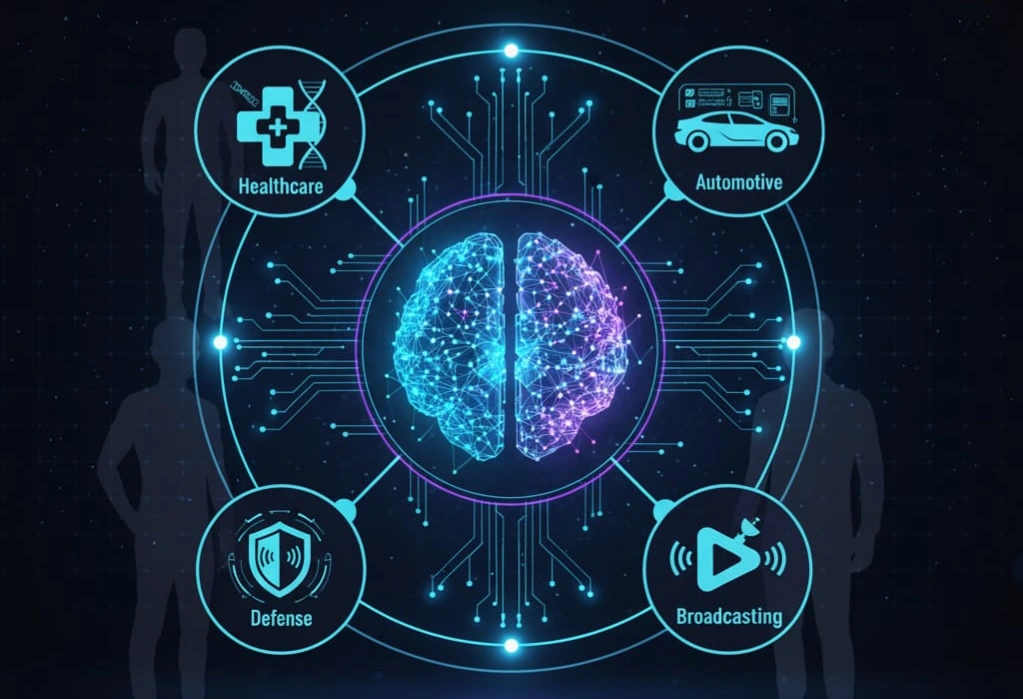
AI & Machine Learning
Deploy edge AI, computer vision models, and custom machine learning pipelines.

Data Engineering
Scalable data architecture, big data processing pipelines, and analytics platforms.

Cloud Solutions
Cloud-native architectures, serverless computing, and secure cloud integration services.